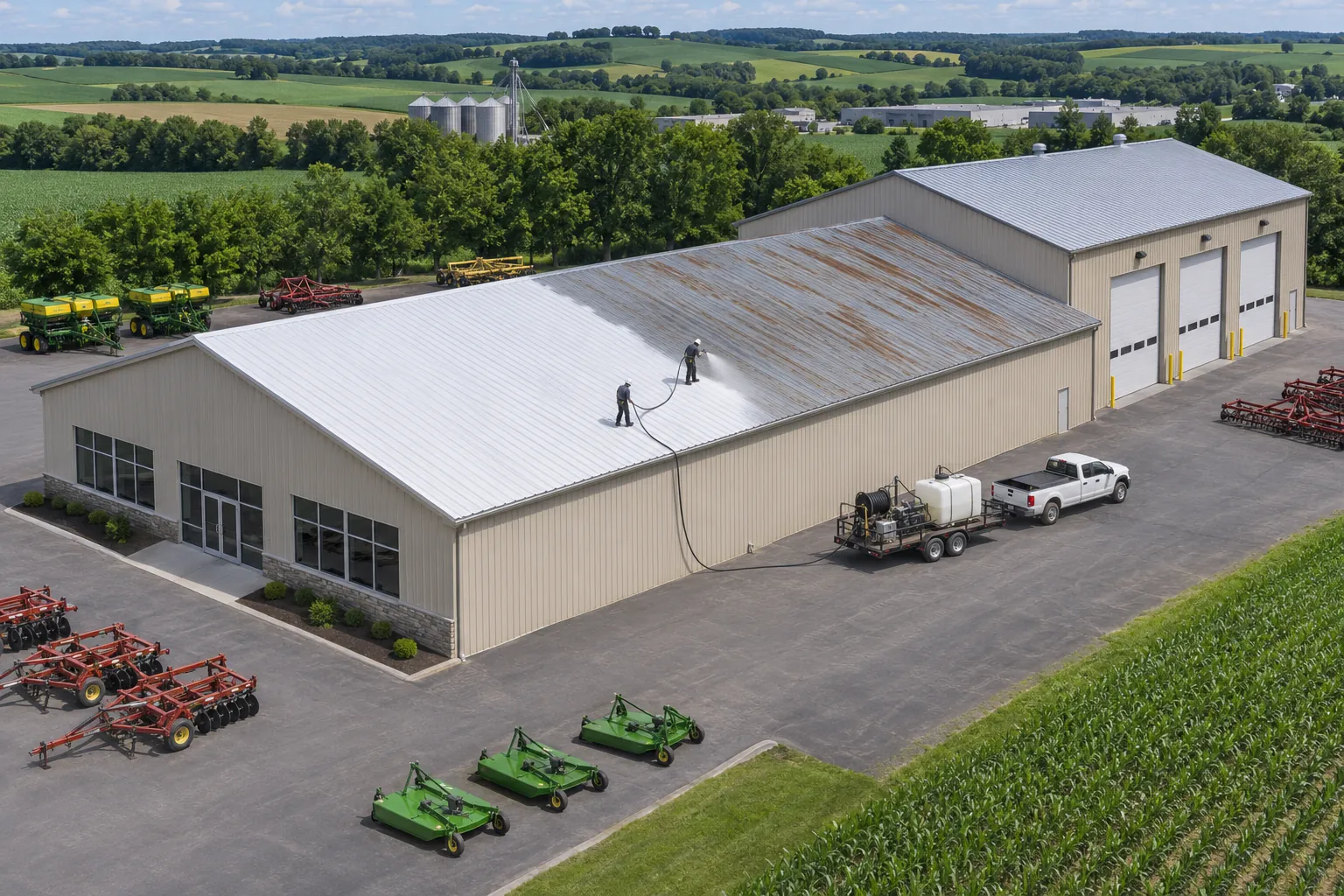
Drone view of a metal equipment building beside farm fields with half the roof coated white and two roofers spraying the rest

Metal Roof Coating Services in Lancaster

Five Coating Systems, Each Chosen After an Inspection

Our metal roof coating services in Lancaster cover five systems, from rust repair and metal coating to silicone, acrylic, spray foam, and shingle work.

  • Five Coating Systems
  • Inspection Before Any Bid
  • Rust Repaired Before Primer
  • Thickness Checked On Every Job

Compare Metal Roof Coating Services in Lancaster, PA

Metal roof coating services in Lancaster start with the roof's slope, drainage, and finish. Each row shows where a system belongs.

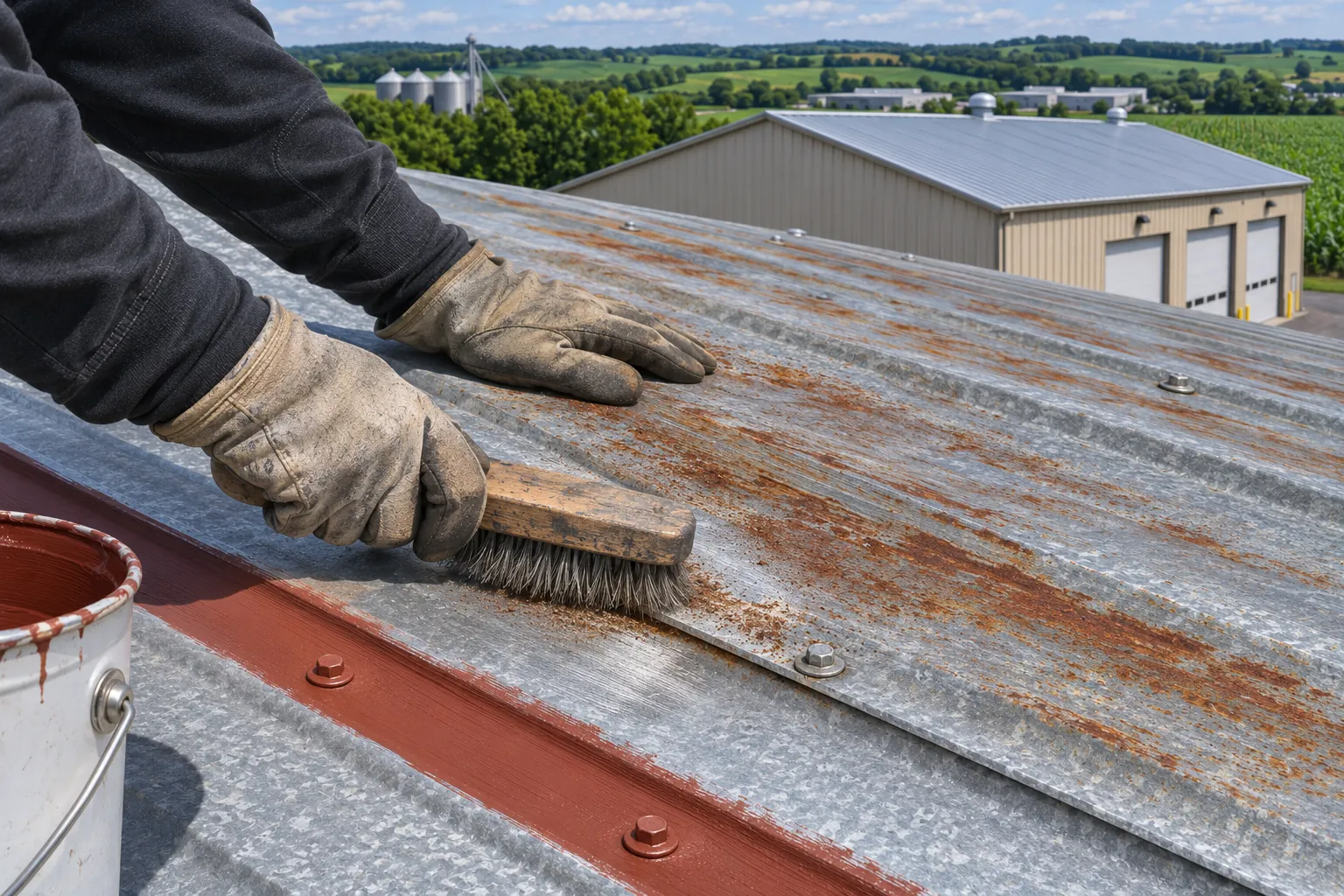
Gloved hands wire-brushing rust along a metal roof lap next to a primed seam
Steel Roofs

Commercial Metal Roof Coating

Screw-down and standing seam steel roofs get a full repair and coating sequence: fasteners, laps, ridge caps, and rust handled before primer and coating go on. Most Lancaster shops and plants start here.

  • For shops, barns, plants, and warehouses
  • Works on pitched and low-slope metal
  • Rust primer matched to the topcoat
  • Ridge caps and closures replaced as needed
Commercial Metal Roof Coating in Lancaster
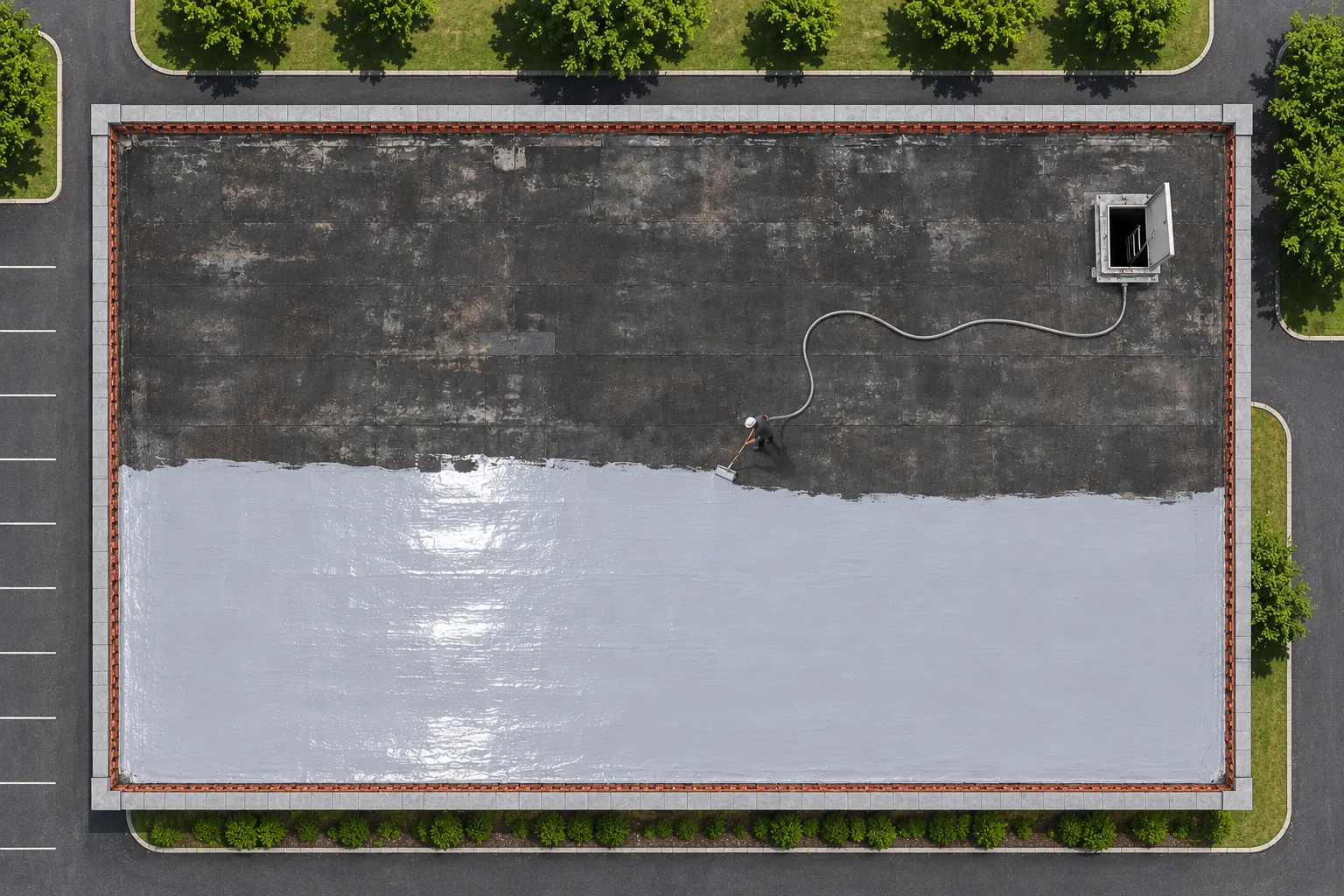
Top-down view of gray silicone coating going down across a dark flat commercial roof
Ponding-Prone Roofs

Silicone Roof Coating

Silicone covers flat and low-slope sections that hold water near drains, once outlets are clear and wet insulation is replaced. Flat additions and dock canopies are common candidates.

  • For flat additions and low-slope metal
  • Applied to a specified film thickness
  • Recoated with silicone later
  • Bleed-blocking primer over old asphalt
Silicone Roof Coating in Lancaster
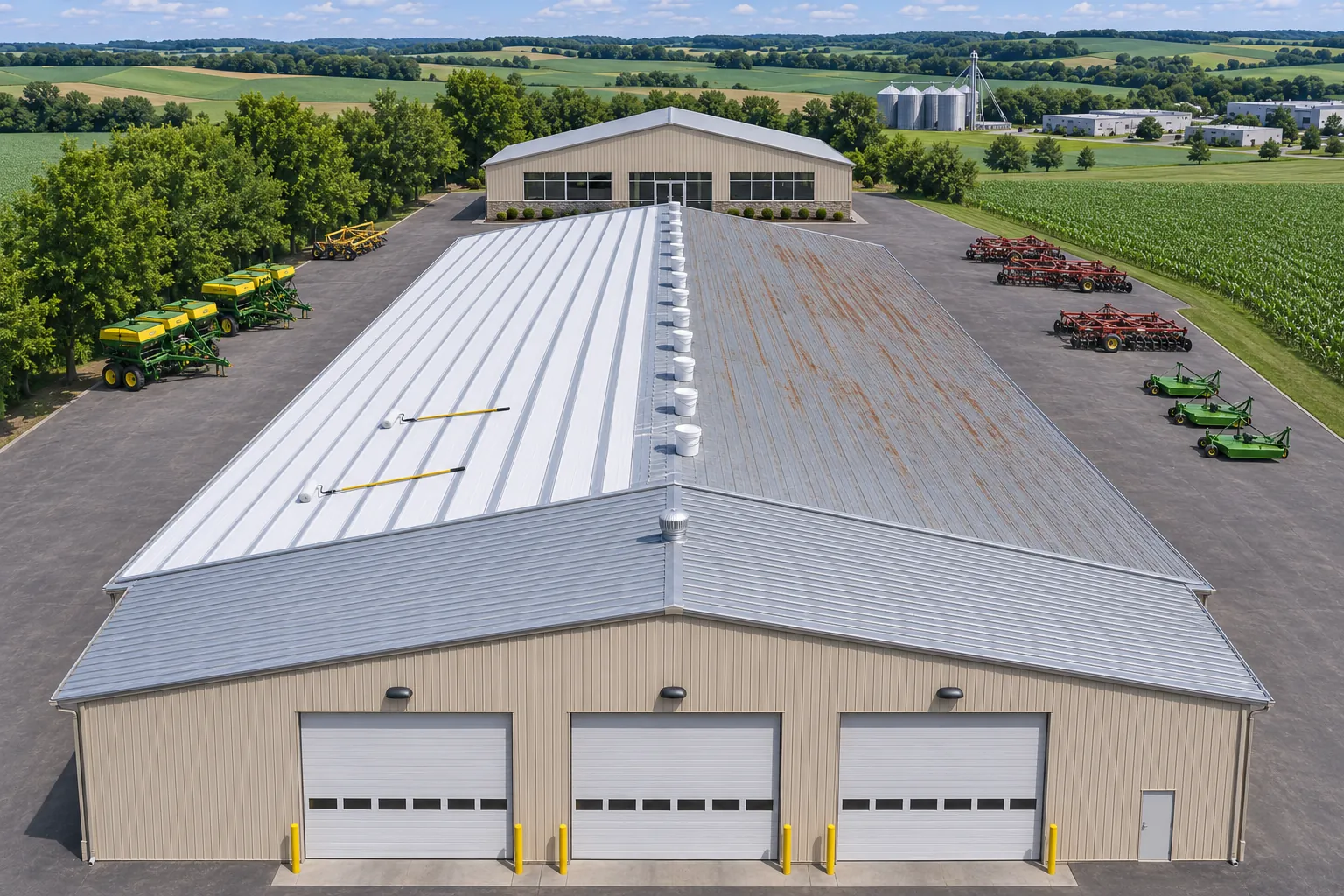
White acrylic coating rolled in lanes along the ribs of a long metal equipment building roof
Fast-Draining Slopes

Acrylic Roof Coating

Acrylic protects pitched metal that sheds water in minutes, put down in two coats during warm, dry weather. Barns and storage buildings with steep panels suit it.

  • For barns, shops, and storage buildings
  • Fabric set into acrylic at laps
  • Washes and recoats with acrylic
  • Coating days set by the forecast
Acrylic Roof Coating in Lancaster
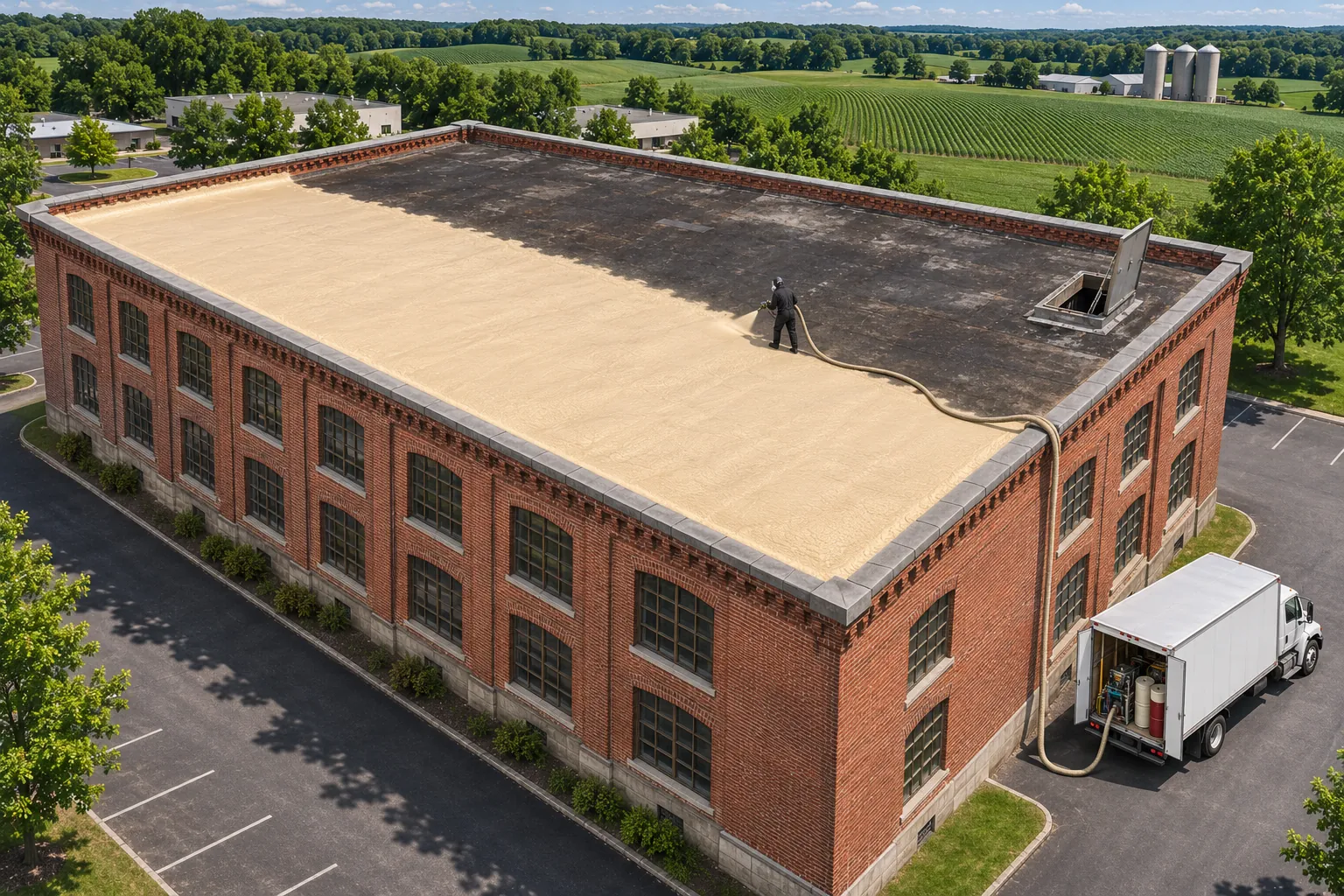
Roofer spraying foam across the flat roof of a brick warehouse, two thirds of the roof already covered
Added Insulation

Spray Foam Roofing

Spray foam builds an insulating layer over dry metal or flat roofs, then a silicone or acrylic topcoat protects it. Heated shops under bare steel gain the most.

  • For heated shops and older flat roofs
  • Overspray controlled at air intakes
  • Recoats over firm, dry foam
  • Extra thickness to build slope at drains
Spray Foam Roofing in Lancaster
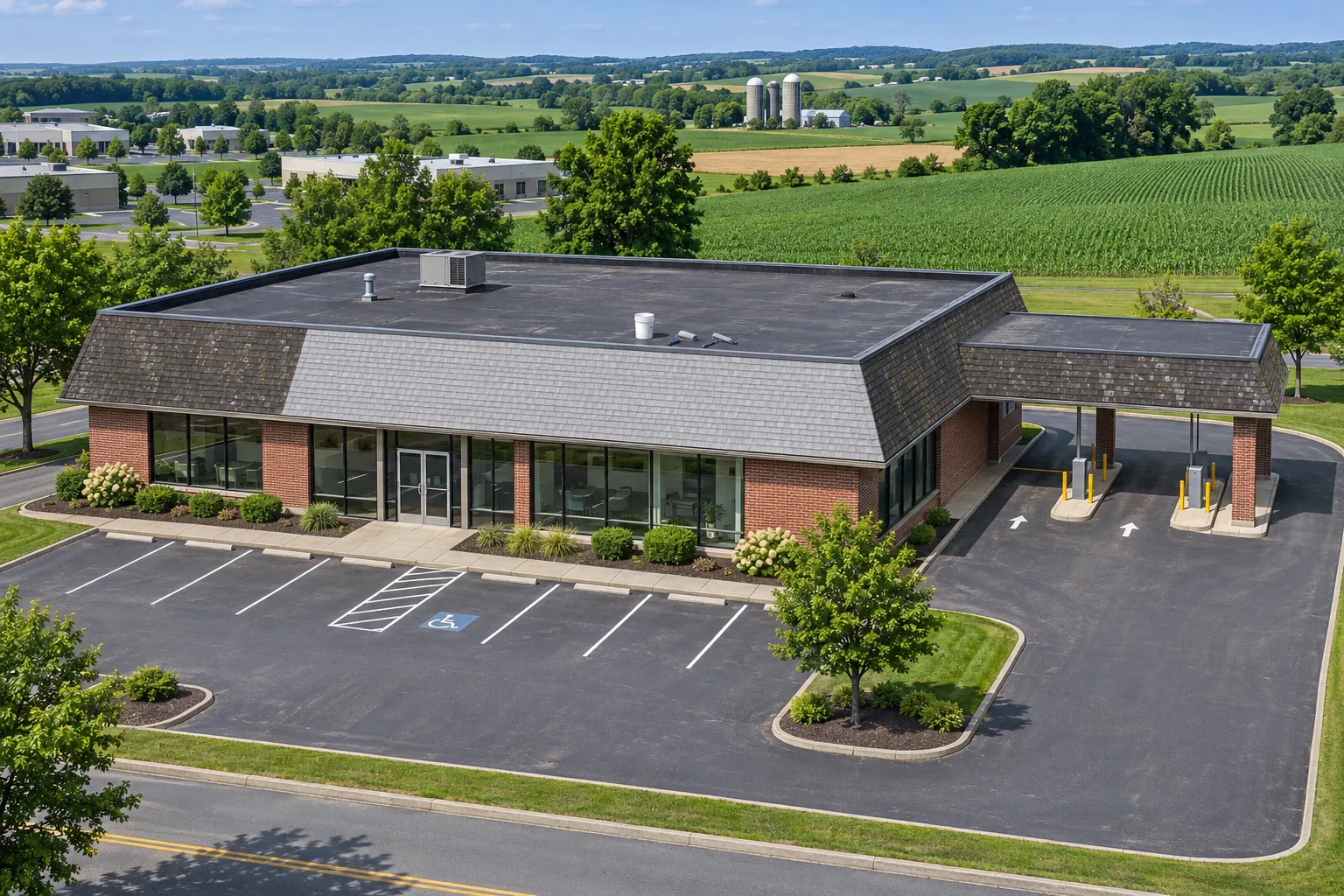
Brick commercial building with a coated shingle mansard face around its flat roof
Shingle Faces

Shingle Roof Coating

Shingle coating covers flat, flexible commercial shingles with a maker-approved product, and worn shingles get a plain replacement call. Church and office roofs make up most of this work.

  • For churches, offices, and mansards
  • Granule loss and curl checked first
  • Flashing reset before coating
  • Replacement named when shingles are worn
Shingle Roof Coating in Lancaster

Which System Fits Which Roof

Slope, standing water, insulation needs, and the current finish narrow the choice fast. This table lines them up across all five systems we apply.

Roof FactorMetal CoatingSiliconeAcrylicSpray FoamShingle Coating
Roof slopePitched or low-slope metalFlat to low slopePitched, fast-drainingFlat or pitchedPitched shingle roofs
Standing waterShort puddles onlyHandles shallow pondingNeeds fast drainageBuilt-up slope helpsNeeds fast drainage
Adds insulationNoNoNoYesNo
Later recoatMatches original systemSilicone onlyAcrylic over acrylicNew topcoatApproved product only
Common buildingsShops, plants, warehousesFlat additions, plantsBarns, storage, shopsHeated shops, older flat roofsChurches, offices
Cure or spray weatherDry days, above freezingTolerates cooler daysWarm, dry hours onlyDry, calm daysDry days, above freezing
Main prep stepScrew and lap repairDrain and seam workRust priming and lap fabricDrying the substrateTab and flashing repair

Unsure Which System Your Roof Needs?

Describe the slope, the leaks, and any old coating. Call us and we will tell you which systems to look at before an inspection.

Our Shared Steps for Every Lancaster Coating System

Every system we apply goes on after the same six steps, in this order, on every roof we take on.

  1. Step 1

    Inspect Your Roof

    We look at slope, drainage, fasteners, laps, insulation, and the current finish before naming a system.

  2. Step 2

    Match The System

    Roof conditions point to metal coating, silicone, acrylic, foam, or shingle coating, and we explain why.

  3. Step 3

    Make Repairs

    Screws, laps, curbs, flashing, drains, and wet insulation are fixed before any primer.

  4. Step 4

    Clean And Prime

    The roof is washed, rust is treated, and a primer matched to the topcoat goes on.

  5. Step 5

    Apply The System

    Coating or foam goes on at the specified thickness, checked as we work.

  6. Step 6

    Record The Work

    Repairs, primer, and film thickness are written down so later recoats start from facts.

Questions About Choosing a Coating System

  1. Which Metal Roof Coating Service Fits My Building?

    Slope and drainage answer most of it. Pitched metal that drains fast usually takes acrylic or a full metal coating system, and flat sections that hold water take silicone.

    Foam fits when insulation is part of the goal, and shingle coating covers only approved shingle roofs.

  2. Can Two Systems Go on One Building?

    Yes. Many Lancaster buildings mix a pitched metal main roof with flat additions or canopies. Each section gets the system that fits it, with the joints between them detailed so the two coatings meet cleanly. Dock canopies and office wings are common second sections.

  3. Does the Old Coating Limit My Choices?

    It can. Silicone already on a roof usually means silicone recoats, and firm acrylic takes more acrylic. Peeling or mixed old coatings get stripped back, which opens up the choice again. We test grip before deciding.

  4. Do All Systems Need Primer?

    Most do on metal. Rust-inhibiting primer goes on bare or rusted steel, and some systems also need an adhesion or bleed-blocking primer. We test primer and coating on a small area before the full roof. Primer choice follows the topcoat.

  5. What Makes One Estimate Higher Than Another?

    Roof size, access, rust and seam prep, fastener sealing, coating type and thickness, number of coats, penetrations, and flashing all add up. Planning figures sit near $2.50 to $4.00 per square foot for coating and $5 to $8 for replacement.

  6. Can Coating Go Over an Old Built-Up Roof?

    When the built-up roof is dry and attached, yes. We core or probe suspect areas, cut out wet sections, and pick silicone or foam with a topcoat to match drainage and insulation needs. Blistered or soaked roofs need more repair first.

  7. How Soon Can a Roof Be Coated After Repairs?

    As soon as the repairs have cured and the roof is clean and dry. Sealants and patches need their own drying time, and primer has to set before the coating goes over it. Weather decides the rest, especially for acrylic.

  8. Is Coating Possible While the Building Is Open?

    In nearly every case. Crews work from the roof, wash water is controlled at the edges, and spray zones are kept clear of air intakes and doors. Production, storage, and offices below carry on while each section is done.

Book Metal Roof Coating Services in Lancaster

Tell us about the roof and the building. We inspect it, explain the options, and recommend the system that fits the slope and drainage.

Call Us(223) 677-3304