
Hot Or Cold Rooms Upstairs
Top-floor spaces swing hard with the weather.
Likely Cause
The roof has little or no insulation.
What We Do
Foam adds an insulating layer, sprayed to the planned thickness.
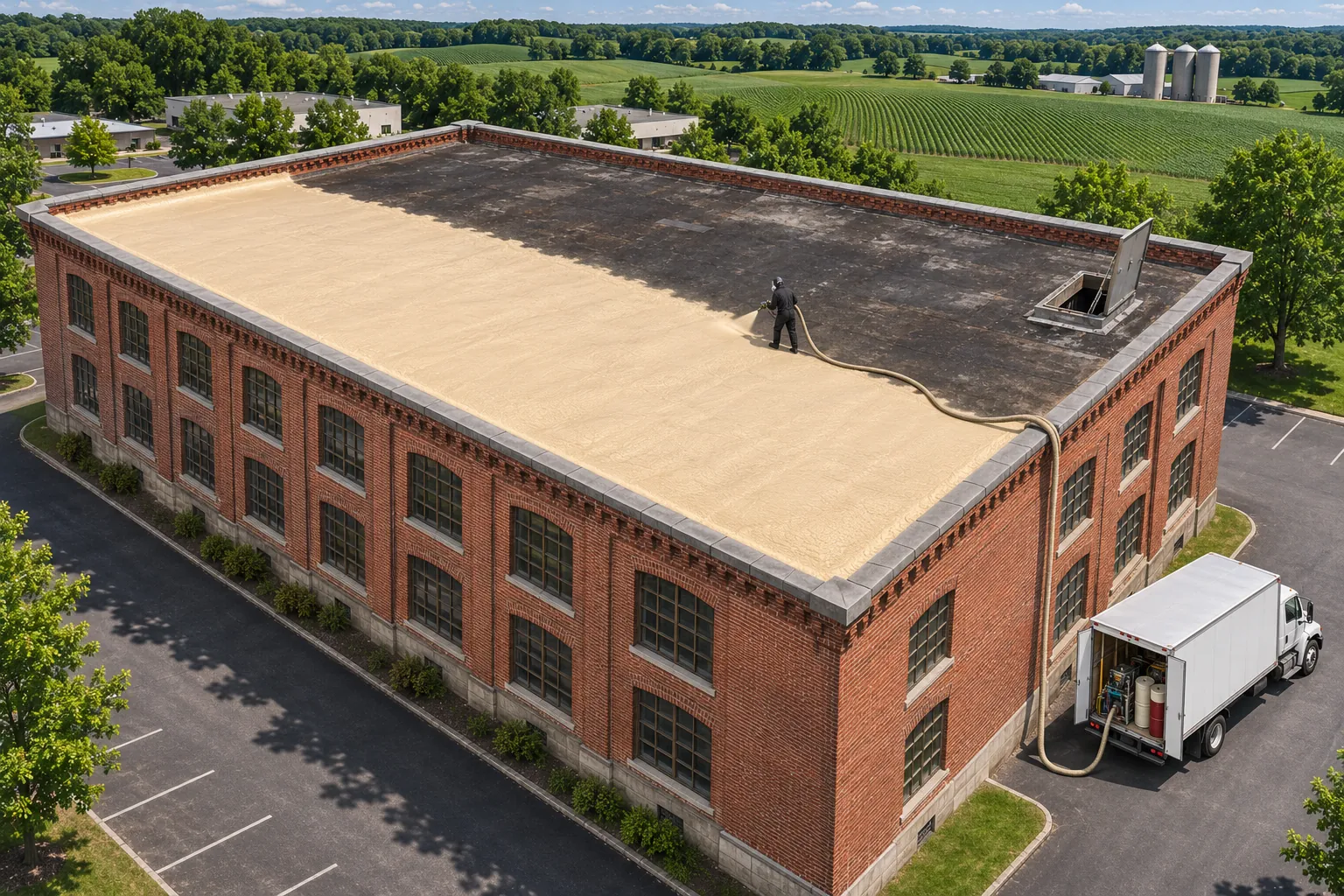
As a Lancaster spray foam roofing contractor, we spray insulating foam over dry metal and flat roofs, then protect it with a coating topcoat.
Lancaster spray foam roofing works over dry, firmly attached roofs. This table shows what we look at first.
| What We Check | Foam Fits | Fix First | Pick Another System |
|---|---|---|---|
| Roof surface | Dry metal or built-up roof | Wet areas to cut out | Wet across most of the roof |
| Attachment | Panels and deck firmly fastened | Loose panels to refasten | Deck failing or rotted |
| Insulation goal | Owner wants added insulation | Condensation to sort out | No need for insulation |
| Nearby intakes | Units that can be shut down | Intakes needing covers | Intakes that must run nonstop |
| Traffic | Light, with walk pads planned | Paths to mark and pad | Constant heavy traffic |
These signs often bring owners to foam. Each one decides what happens before spraying. Wet roofs wait.
Top-floor spaces swing hard with the weather.
The roof has little or no insulation.
Foam adds an insulating layer, sprayed to the planned thickness.
Areas of an older flat roof feel spongy when walked.
Water has soaked the insulation below.
Wet material is cut out and replaced before any foam goes on.
Drips show along laps all over a metal roof.
Many joints have opened at once.
Foam fills the ribs and covers every lap in one surface.
An existing foam roof looks chalky with small pits.
The topcoat has worn and sun is reaching the foam.
We repair damaged foam and apply a fresh topcoat.
Puddles collect around roof drains on an older flat roof.
The roof has settled and water runs away from the drains instead of toward them.
Foam is sprayed thicker in places to build slope back toward the drains.
Foam is one of four systems we apply in Lancaster. Here is how it compares on the roofs we see.
Foam sprayed over metal fills the ribs, seals laps, and adds insulation in one layer.
Every foam roof gets a protective coating to shield it from sun and wear.
Roofs that need waterproofing but no extra insulation can take silicone alone.
Sloped metal that drains fast and needs no insulation can take acrylic over primer.
Spray foam over a prepared roof gives Lancaster owners these gains.
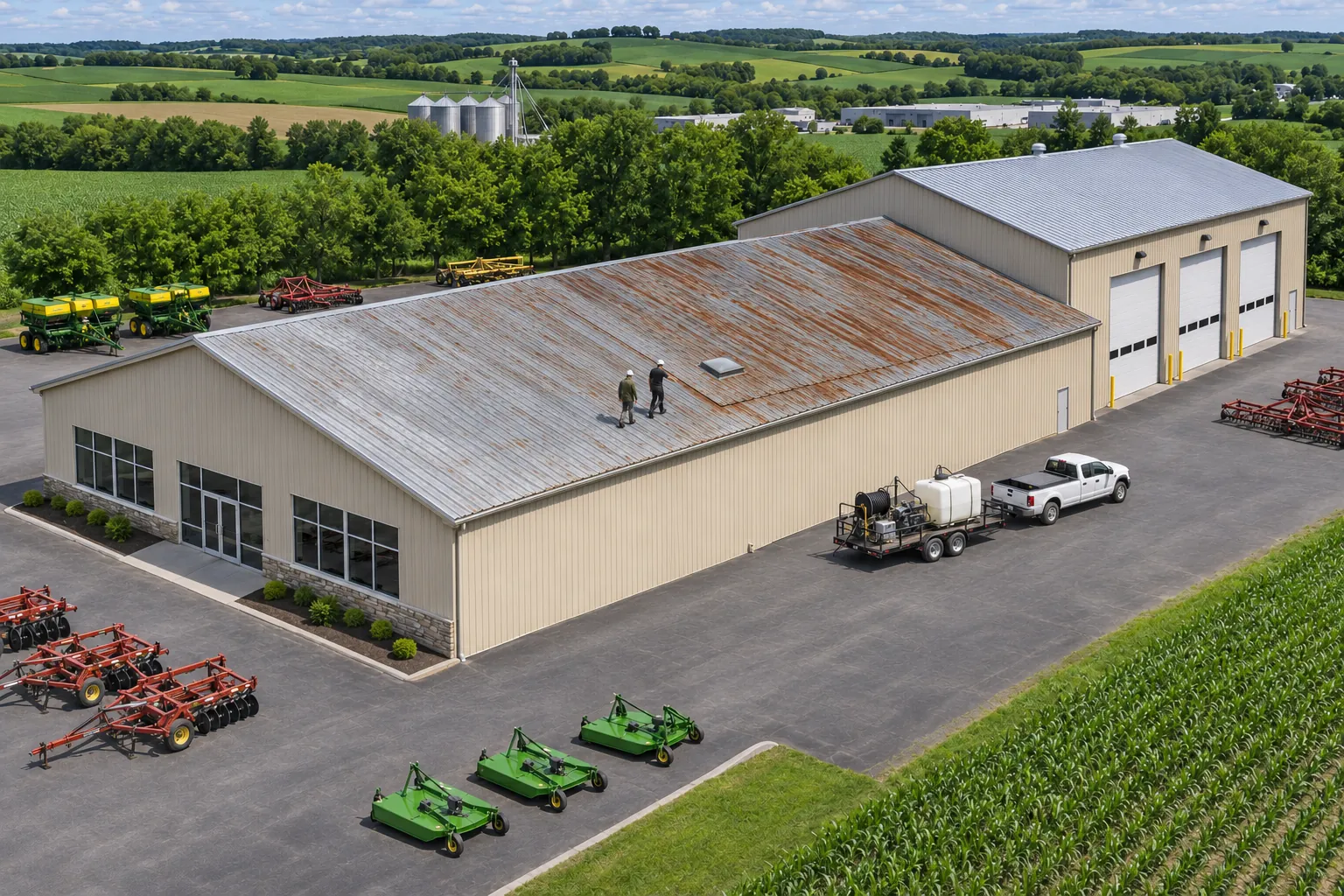
Foam adds a continuous insulating layer across the whole roof.
Laps, seams, and fasteners disappear under a single sprayed layer.
Extra thickness can be added to help water move toward drains.
A coating over the foam shields it from sun and weather.
Its light weight helps on older buildings with modest framing.
Future upkeep is a wash and a fresh topcoat over firm foam.
Curbs and vents get foam and coating built up around them.
You get readings of the foam and topcoat thickness.
Bare steel overhead gives little protection from summer heat. Call us and we will check whether foam fits the roof.
Five steps, with dryness and overspray control built in.
We check for wet insulation, loose panels, and nearby air intakes, and confirm the roof can carry the work.
Wet material is removed, panels refastened, and the surface left fully dry before spraying.
Air intakes are shut or covered, and wind is checked so overspray stays on the roof.
Foam goes on in passes to the planned thickness, with extra toward drains where slope helps.
A silicone or acrylic topcoat covers all foam to protect it from sun and wear.
Thickness of the foam and topcoat is measured across the roof and written down for later recoats.
Roofs that need no insulation take a coating alone. These are the other services we offer.
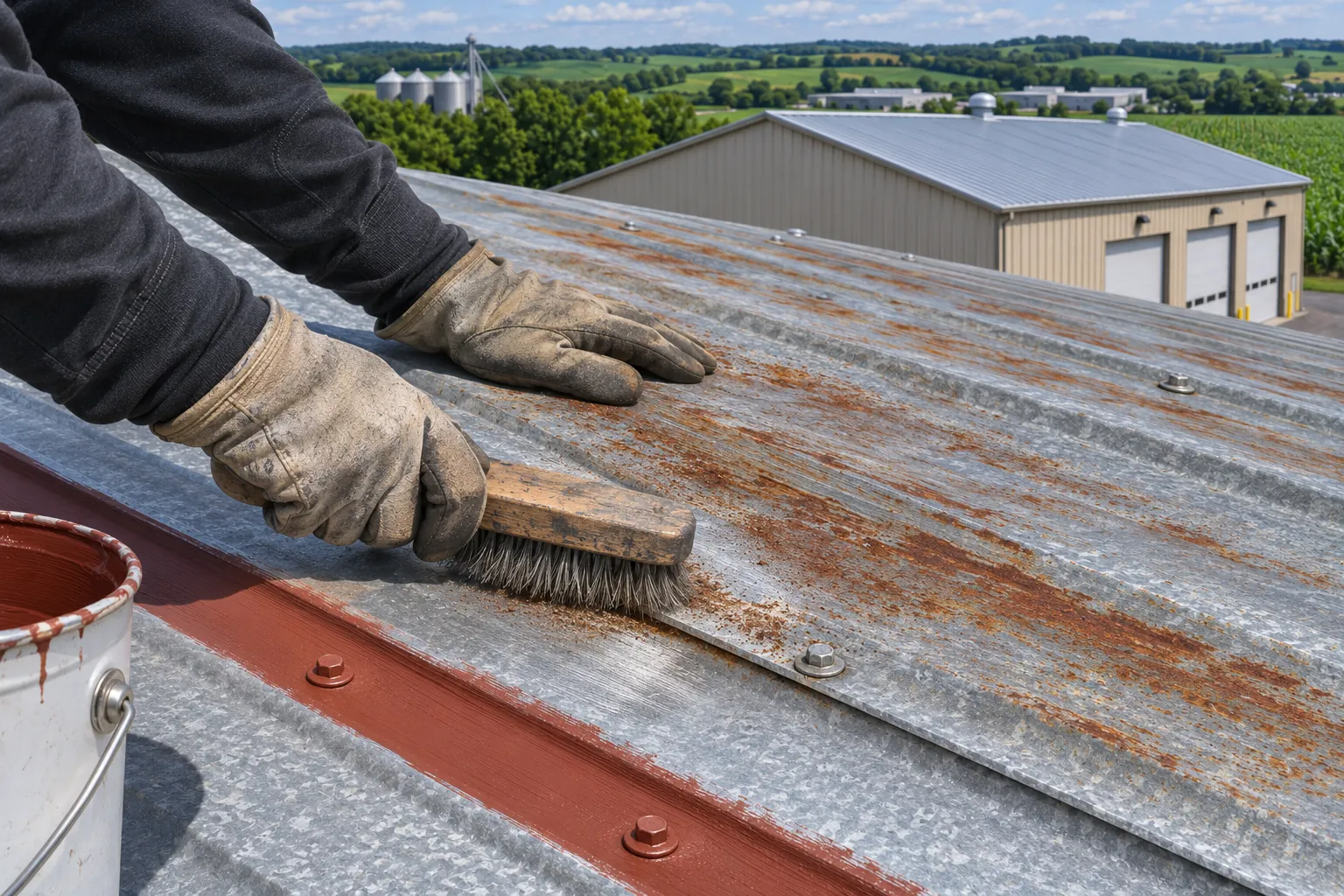
Steel roofs that need fastener, lap, and rust repair first.
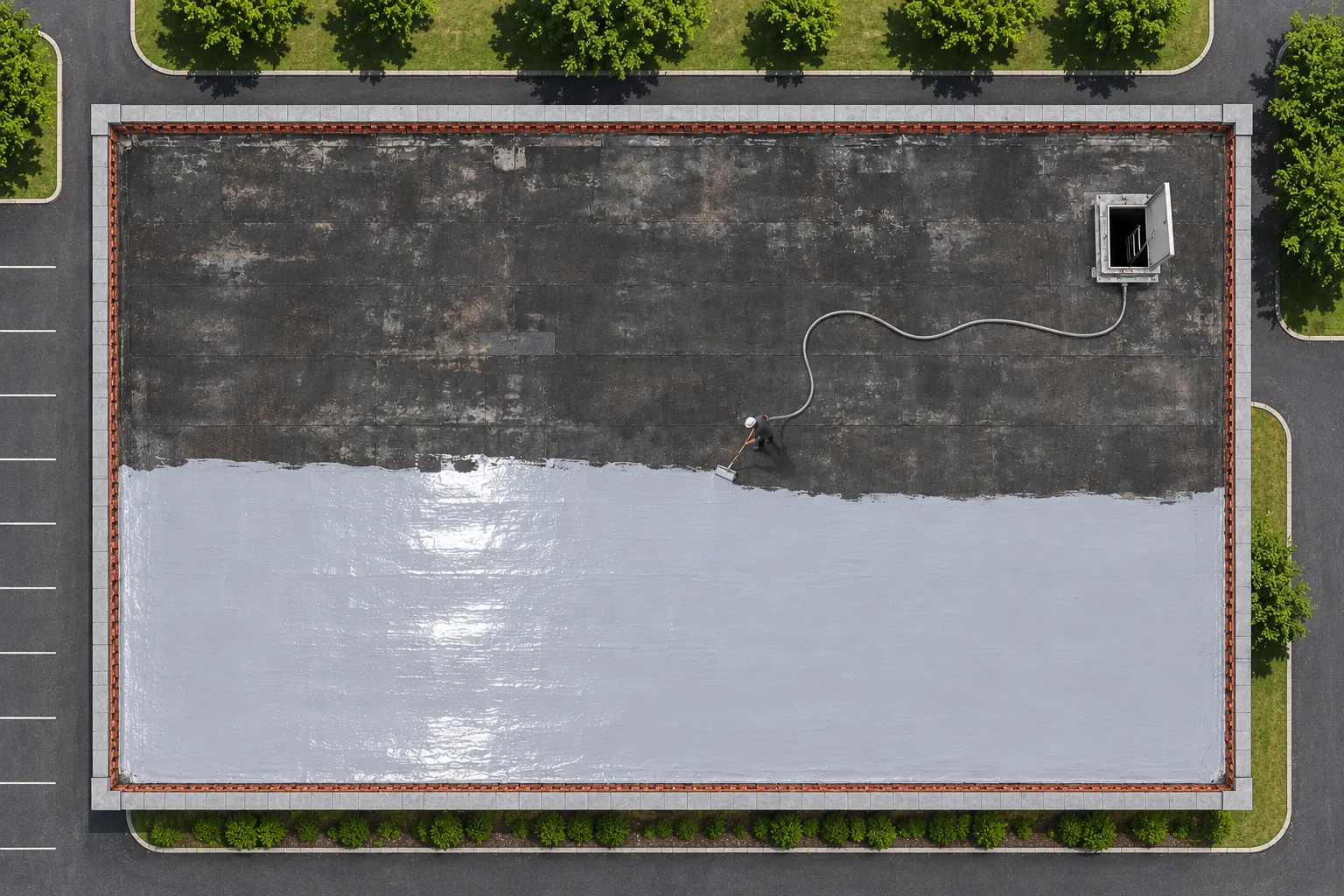
Low-slope and flat sections where water sits after rain.
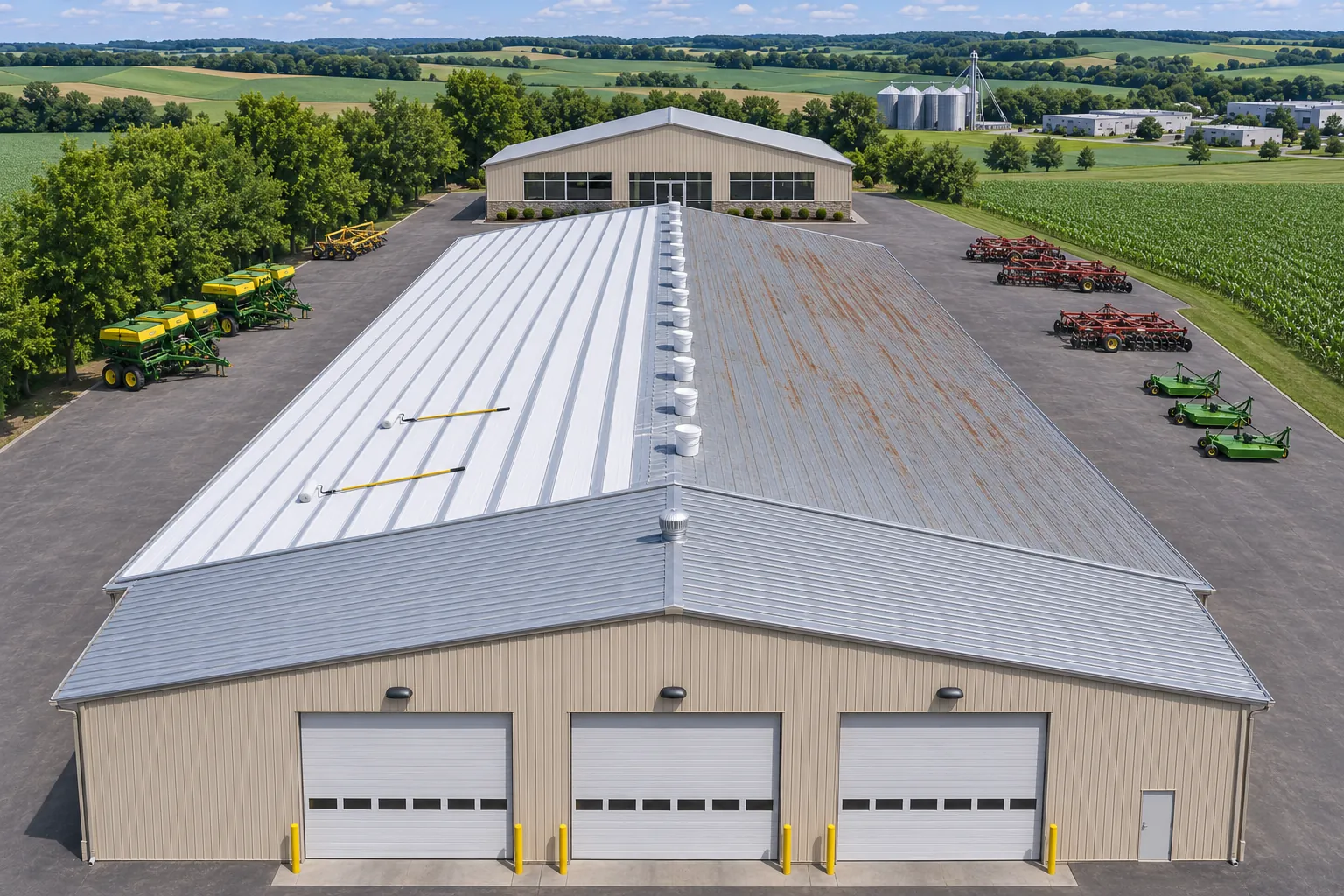
Sloped metal that drains fast, coated in warm, dry weather.
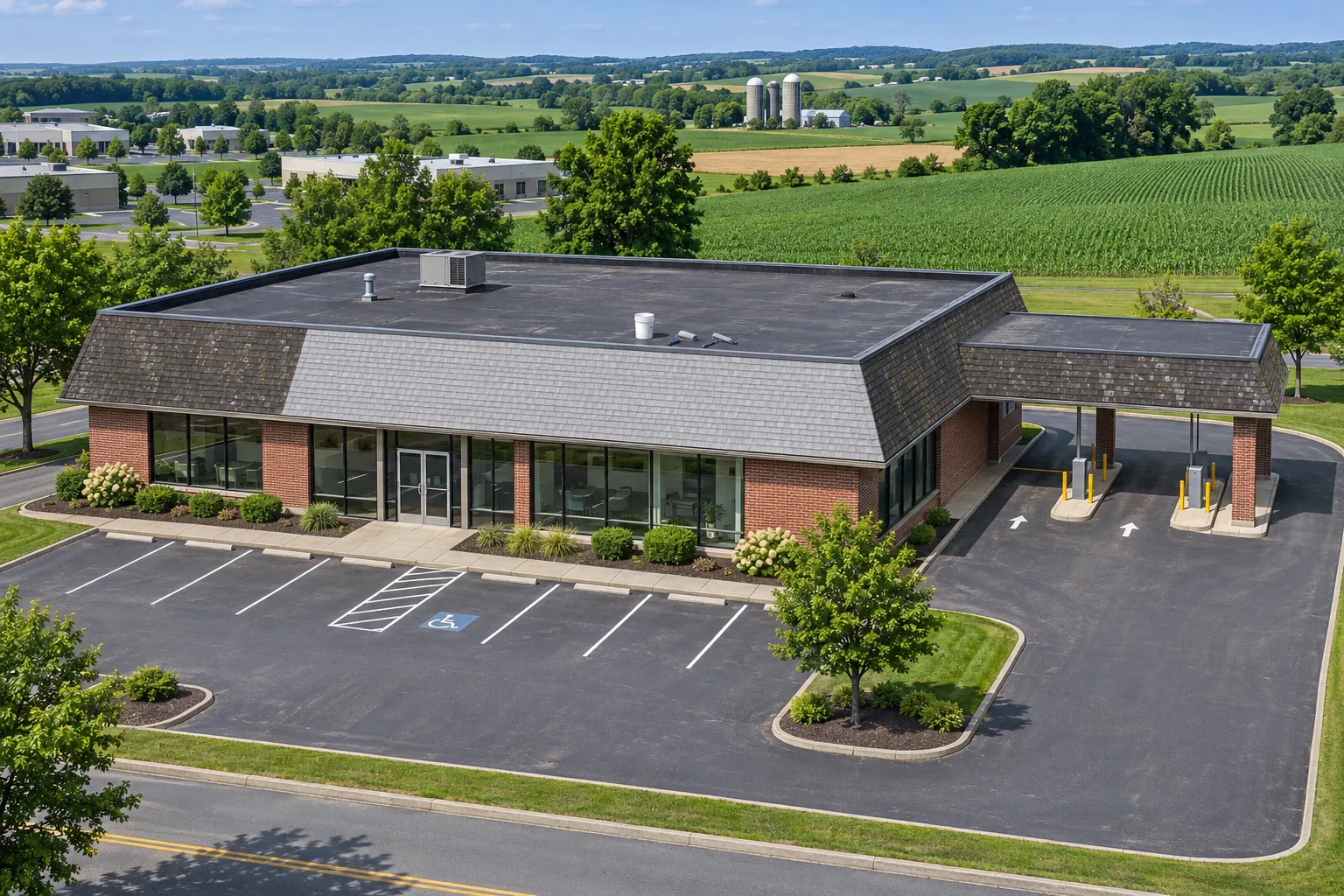
Commercial shingle roofs that still lie flat and keep their granules.
Foam lasts as long as its topcoat keeps sun and water off it. Recoating on schedule and repairing punctures promptly keeps the foam working. Roofs with heavy foot traffic or skipped recoats wear faster. We record thickness readings so later recoats start from facts.
We clean the old topcoat, repair any punctures or damaged foam, and check for wet areas. A fresh topcoat then goes on at the specified thickness over firm, dry foam. Walk pads go back on busy paths.
On the plus side, foam adds insulation, covers every seam, and weighs little. On the downside, it needs dry weather, careful overspray control, and regular topcoat upkeep. Damaged areas need prompt repair. Foam fits best where insulation is part of the goal.
Age only starts the conversation. We look for wet foam, punctures, and worn topcoat before judging the roof. Firm, dry foam often takes repairs and a recoat, while wet or badly damaged areas need cutting out.
Punctures, damaged foam, and wet areas come first. We also check old repair edges and how well the existing topcoat grips. A new topcoat goes on only after those repairs, so no moisture or loose material ends up sealed underneath.
Spraying above active processing needs tight control of overspray and air intakes, and it limits when work can happen. Later on, traffic and maintenance have to be managed to protect the topcoat. Foam still adds insulation and one surface, and those limits come with it.
Spray foam needs a dry roof and calm, dry spraying weather, and overspray has to be controlled near cars, intakes, and neighbors. Its topcoat needs regular checks and recoats, and punctures from foot traffic need quick repair to keep water out of the foam.
Tell us about the roof, the insulation, and what runs below. We inspect, dry it out, and spray.