
Puddles That Linger
Water stays in the same low areas a day after rain.
Likely Cause
Outlets are partly blocked or the deck has a slight sag.
What We Do
We clear outlets, correct what we can, and plan extra silicone thickness there.
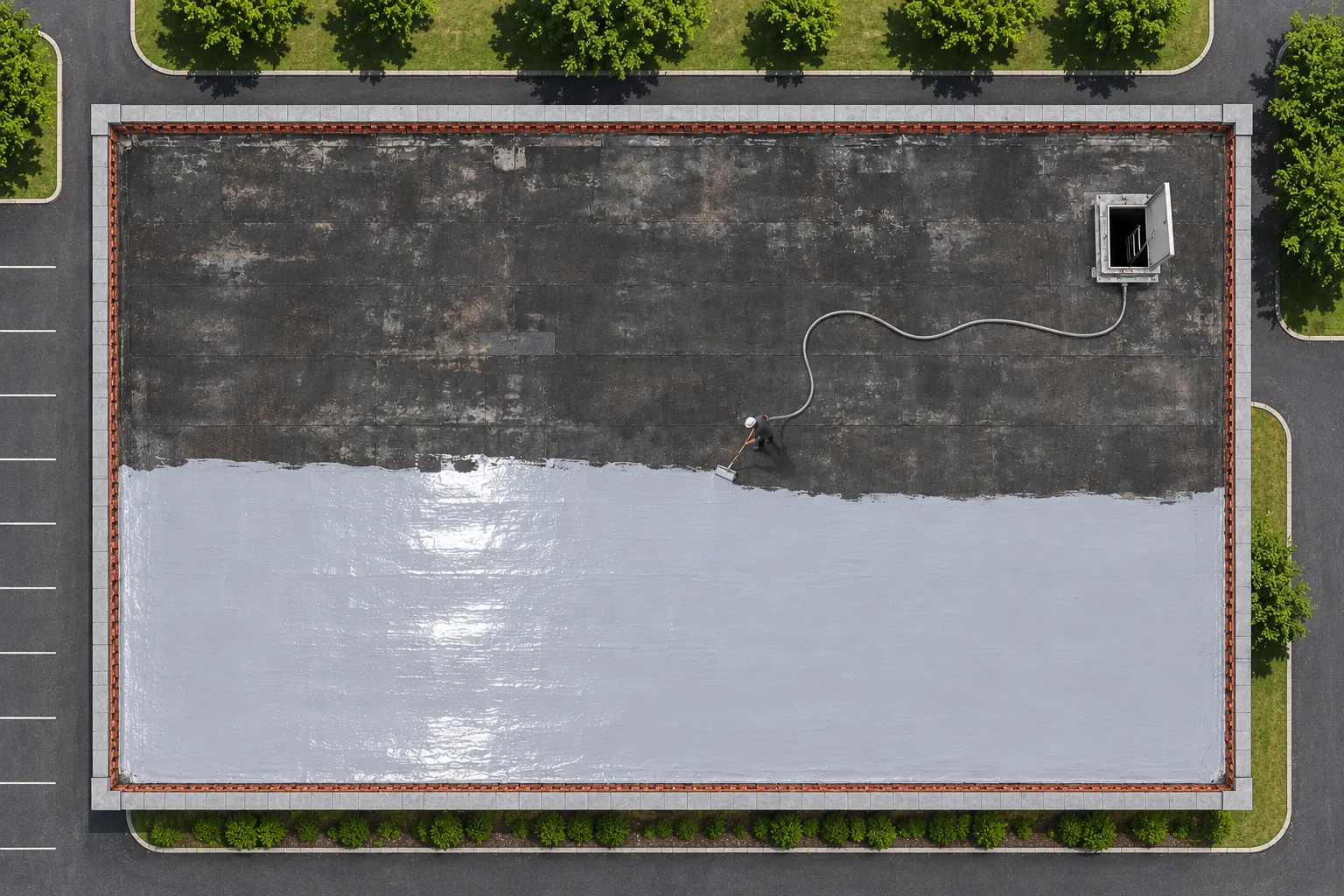
As a Lancaster silicone roof coating contractor, we coat low-slope metal and flat roofs where water lingers, after fixing drains and testing primer adhesion.
Lancaster silicone roof coating fits low-slope roofs that hold some water. This table shows what we check before choosing it.
| What We Check | Silicone Fits | Fix First | Pick Another System |
|---|---|---|---|
| Drainage | Shallow puddles that clear in a day or two | Clogged outlets or sagged gutters | Deep ponds from a sagging deck |
| Insulation | Dry when checked | Small wet areas to replace | Wet across large sections |
| Existing finish | Bare metal or aged single-ply | Peeling paint to scrape | Acrylic coating already on the roof |
| Foot traffic | Light, with marked paths | Busy paths needing walk pads | Heavy daily traffic everywhere |
| Later upkeep | Silicone-only recoats planned | Repairs needed before a recoat plan | Plans to switch systems later |
Low-slope roofs show these signs before a silicone job. Each one shapes the preparation.
Water stays in the same low areas a day after rain.
Outlets are partly blocked or the deck has a slight sag.
We clear outlets, correct what we can, and plan extra silicone thickness there.
Brown rings appear under an older flat roof.
Asphalt or old coatings are bleeding through and water is getting under them.
We test for bleed-through and use a blocking primer before silicone goes on.
Drips line up under rows of fasteners on low-slope metal.
Washers have failed where water sits longest.
Screws are upsized with new washers and the rows get extra coating.
Damp areas surround rooftop units and vents.
Curb flashing has opened where water collects against it.
Curbs are reflashed and reinforced with fabric under the silicone.
Seams along a low-slope metal roof show dark lines of dirt and moisture.
Water rides along the seams and works into gaps the sealant no longer closes.
Seams get cleaned, sealed, and covered with fabric set in silicone before the full coat.
Silicone is one of four systems we apply on Lancaster roofs. Here is where each one fits next to it.
Low-slope metal and flat roofs with lingering water get silicone in one or two passes to the specified film.
Steeper metal roofs that drain in minutes can take acrylic, which recoats easily with more acrylic.
Roofs needing insulation can take spray foam, with silicone as the protective topcoat.
Rust primers and bleed-blocking primers are tested on the roof before silicone goes on.
Silicone over a repaired low-slope roof gives Lancaster owners these gains.
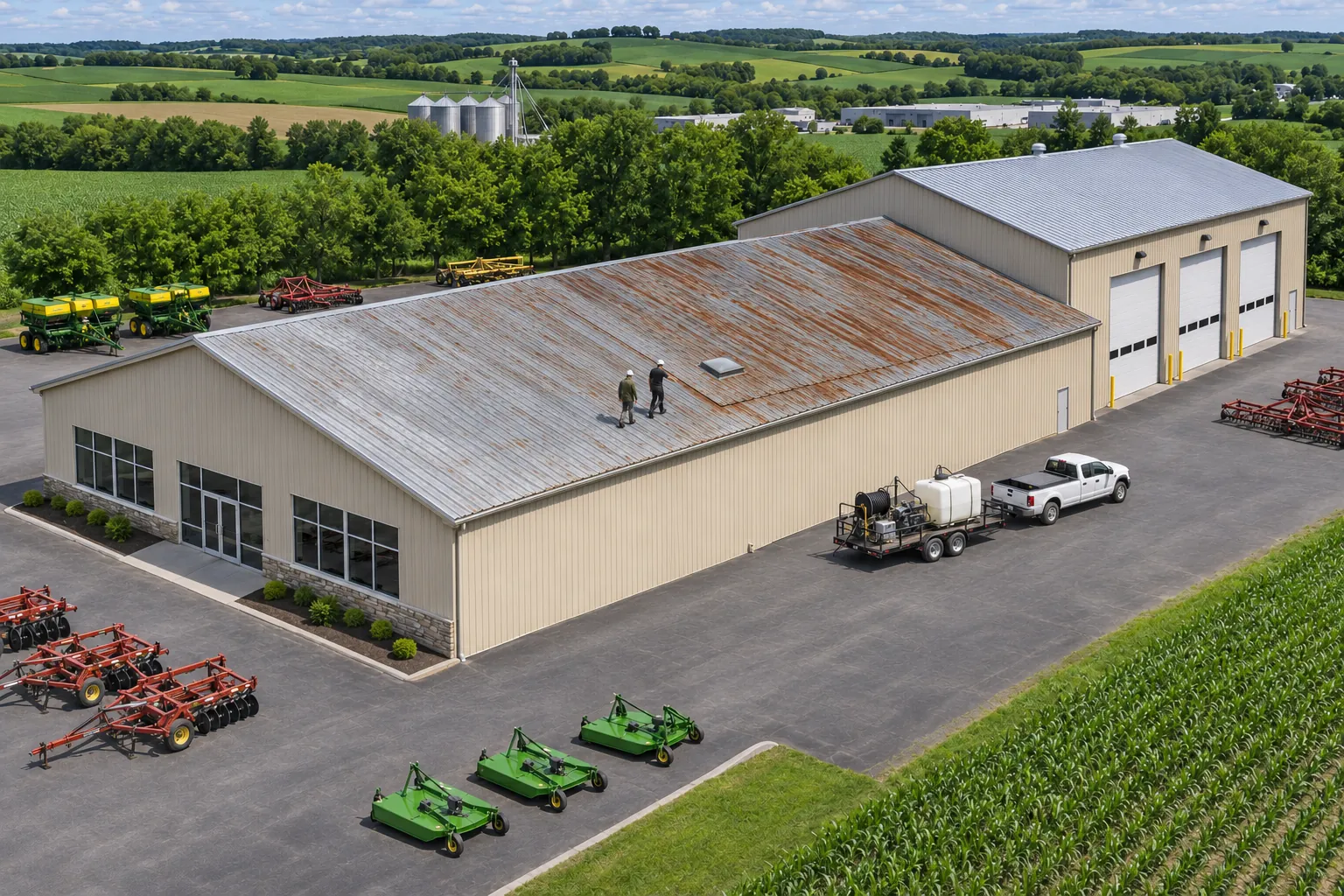
Cured silicone handles water that sits in shallow low spots.
A white silicone surface reflects summer sun off the roof.
Laps and seams sit beneath a continuous coat with no open joints.
Every fastener row gets extra silicone over primed heads.
Crews coat from above while production continues inside.
Future recoats use silicone over a cleaned surface.
Fabric and extra film go around units and vents.
You get readings of the film thickness across the roof.
Standing water finds weak seams first. Call us and we will check the drains and the seams before the next storm.
Five steps, in order, on every silicone job.
We map low spots and outlets, test screws, check curbs and seams, and look for wet insulation under the surface.
Outlets are cleared, wet insulation replaced, screws upsized, and curbs and seams reinforced with fabric.
Pressure washing removes dirt and chalk, and the roof dries fully before primer.
A small primer and silicone patch is checked for grip and bleed-through before the full roof.
Silicone goes on in one or two passes to the specified film, with extra at low spots and seams.
Steeper or insulated roofs take a different system. These are the other services we offer.
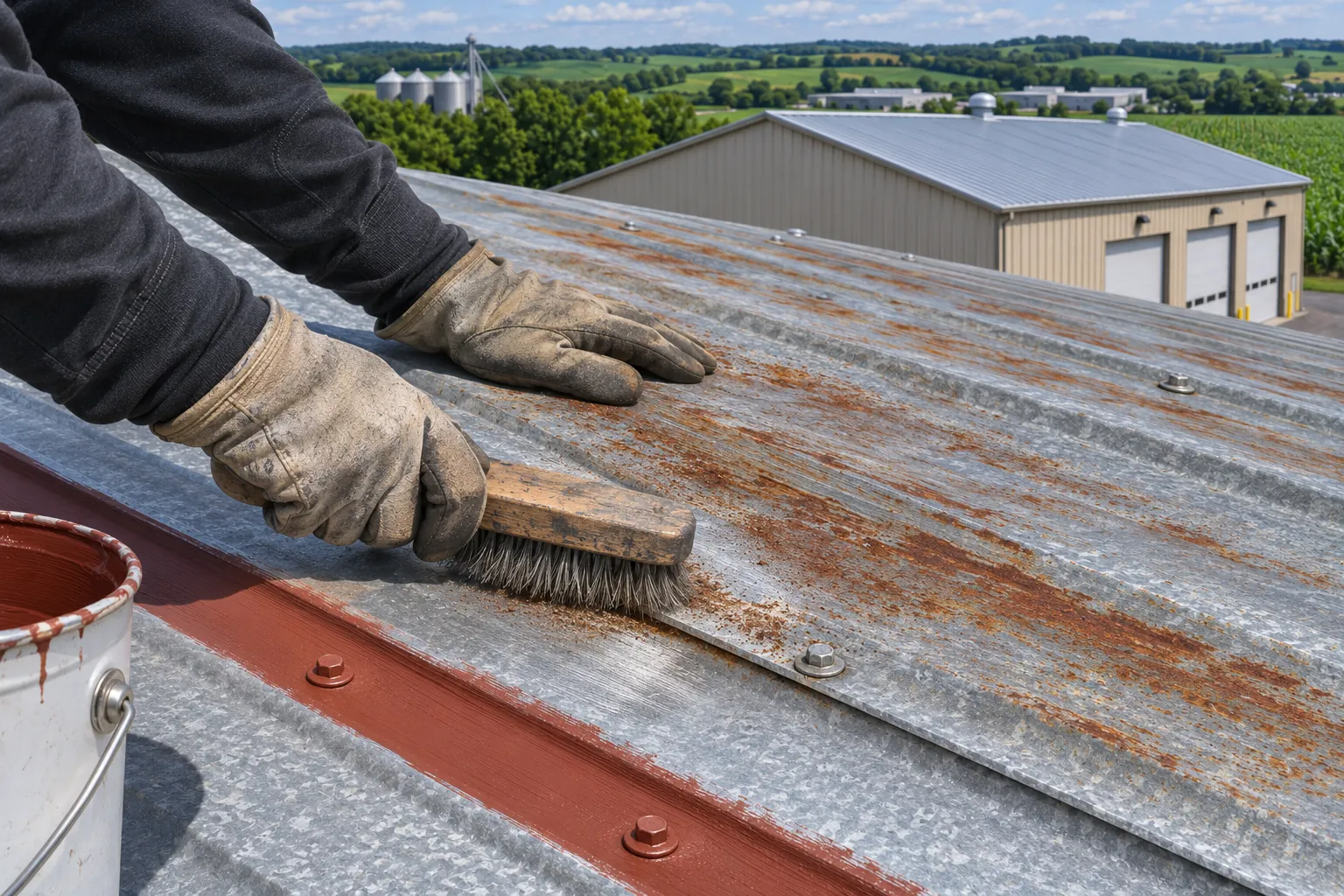
Steel roofs that need fastener, lap, and rust repair first.
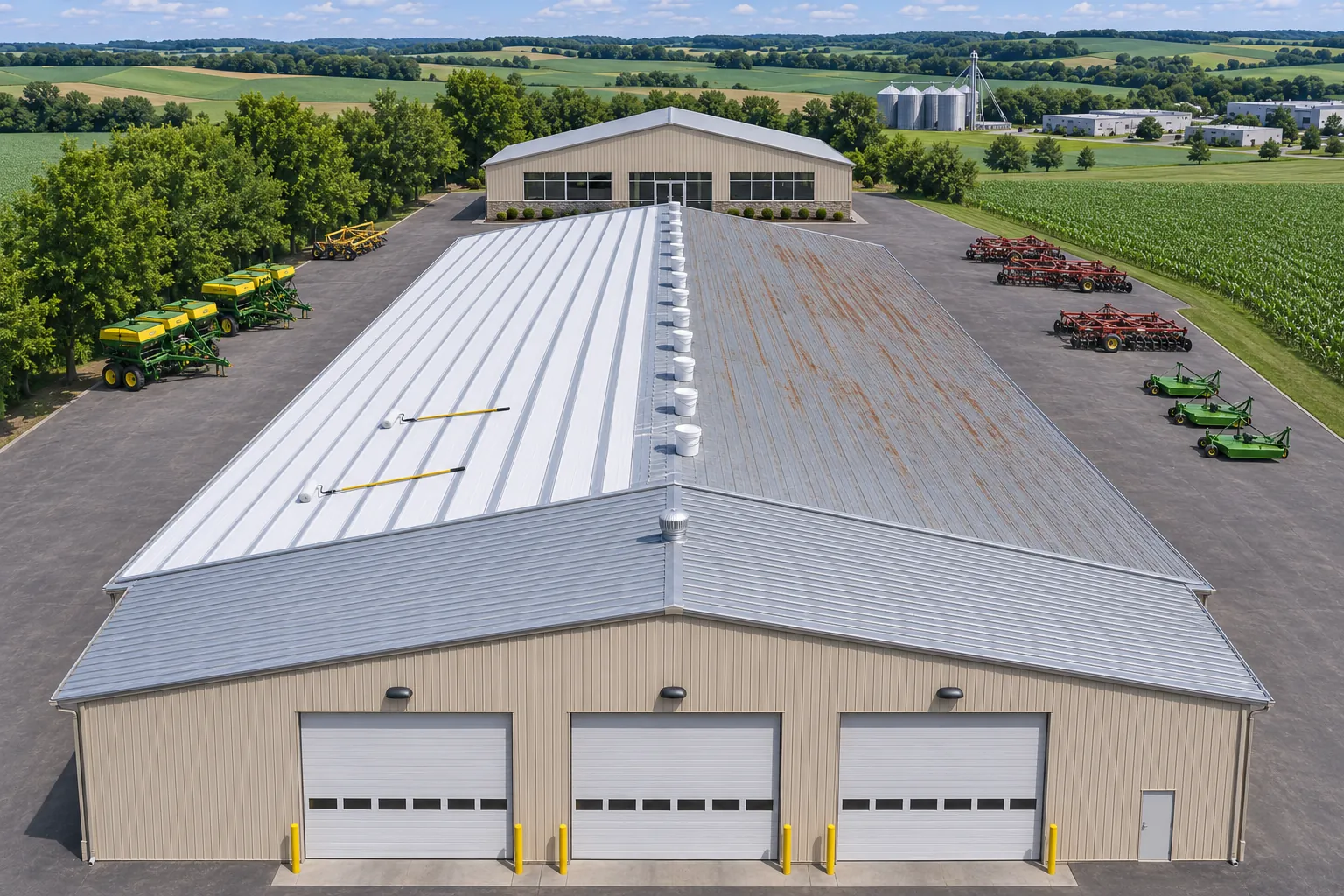
Sloped metal that drains fast, coated in warm, dry weather.
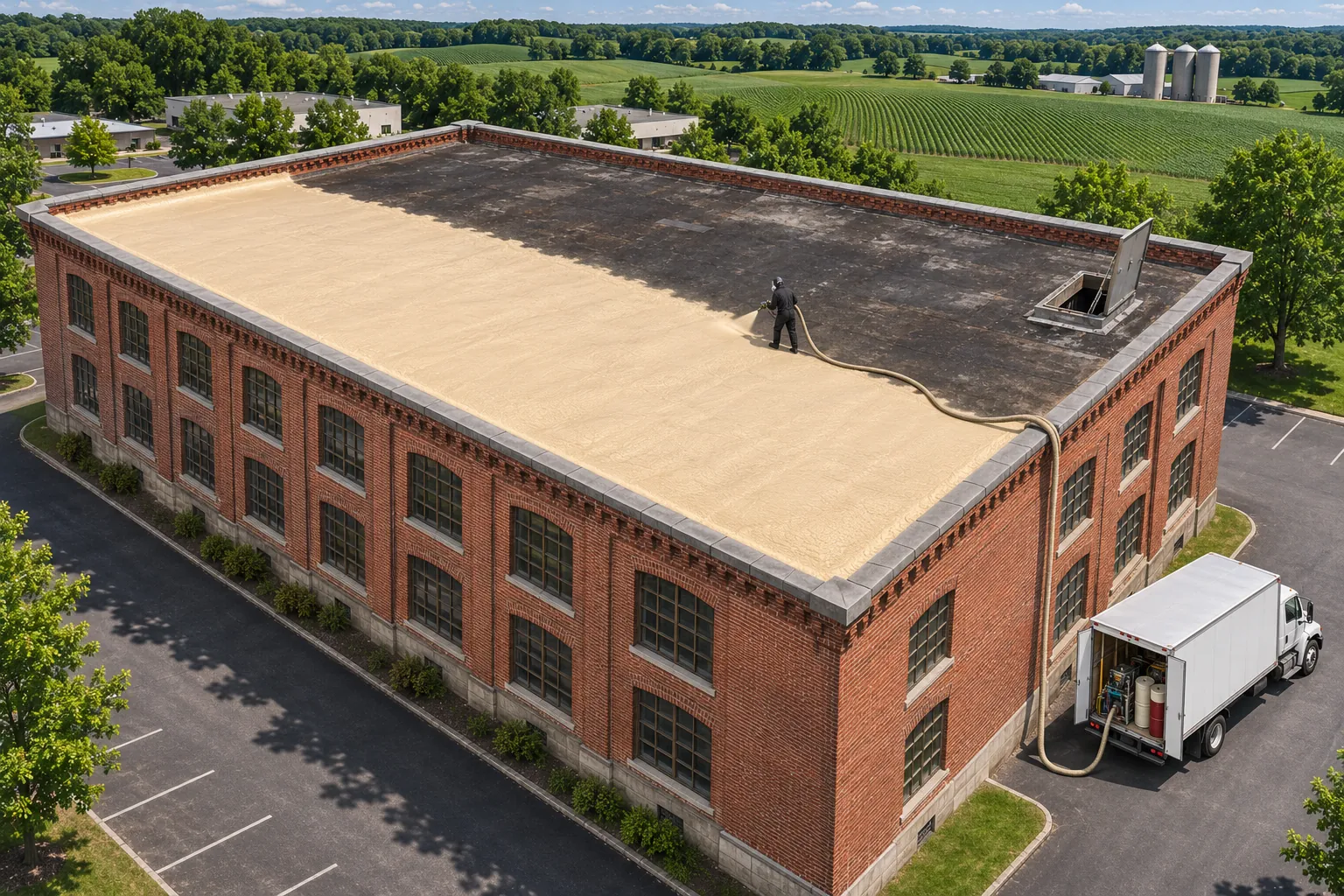
Roofs that need added insulation and one continuous surface.
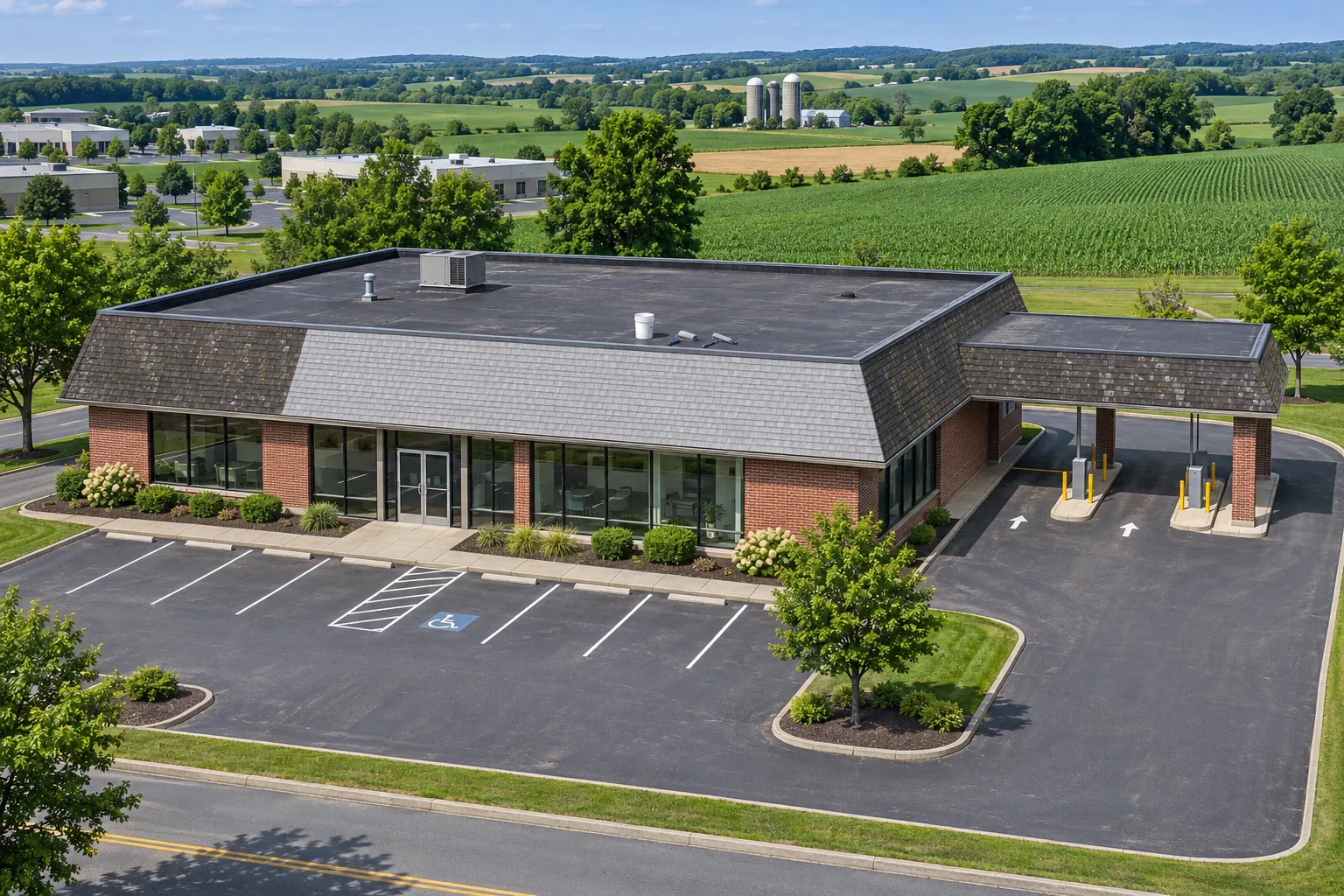
Commercial shingle roofs that still lie flat and keep their granules.
The answer comes from the specified finished thickness rather than a fixed count. Many silicone systems reach that thickness in one or two passes. We measure as we go and add material at seams, screws, and low spots until the spec is met.
Its life follows thickness, adhesion, drainage, and foot traffic. A clean, well-primed roof with the full specified film lasts longest. Washing and touching up worn spots, especially along walk paths, keeps it working, and silicone recoats grip cleaned silicone.
Silicone handles standing water and holds up on low-slope roofs. Acrylic suits steeper roofs that drain fast and recoats easily with more acrylic. Once silicone is on, later coats have to be silicone, which matters for long-term upkeep.
The product's specification sets the finished film thickness and the application method. From that, we work out how many passes it takes on this roof, adding coverage at ribs, repairs, and reinforced details. Preparation of the metal underneath matters as much as the count.
Often, if the product's specification allows for that moisture. We first check low spots, outlets, and existing finishes, then compare the actual products. Neither coating fixes wet insulation or a drain that sends water the wrong way, so those get corrected first.
Thin spots that show the surface below, edges lifting at seams, and worn areas along walk paths are the usual signs. We check whether the wear is local or spread out, then decide between spot repairs and a full recoat.
Yes, on low-slope metal it works well once the screws, seams, and rust are dealt with. Primer is usually needed on bare or rusted steel. On steeper metal that drains fast, acrylic often makes more sense because of how it recoats.
Send the roof size and where water sits after rain. We inspect, fix the drains and seams, and coat.