Rust Bloom Along Laps
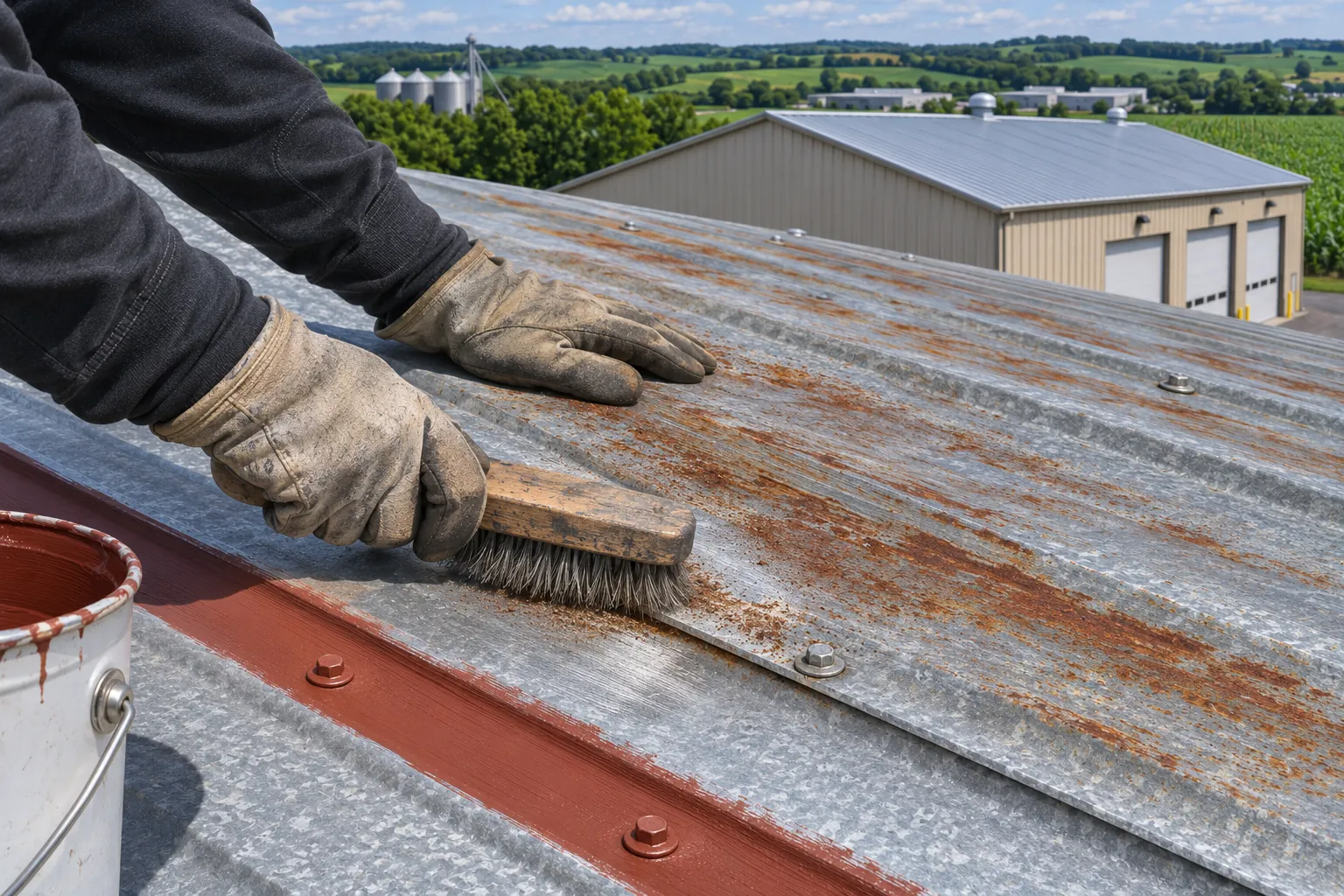
Orange streaks run down the slope from overlapping panel edges.
Water sits in the lap and rusts both panels from inside the joint.
We open what we can reach, remove loose rust, treat it, and seal the lap before coating.
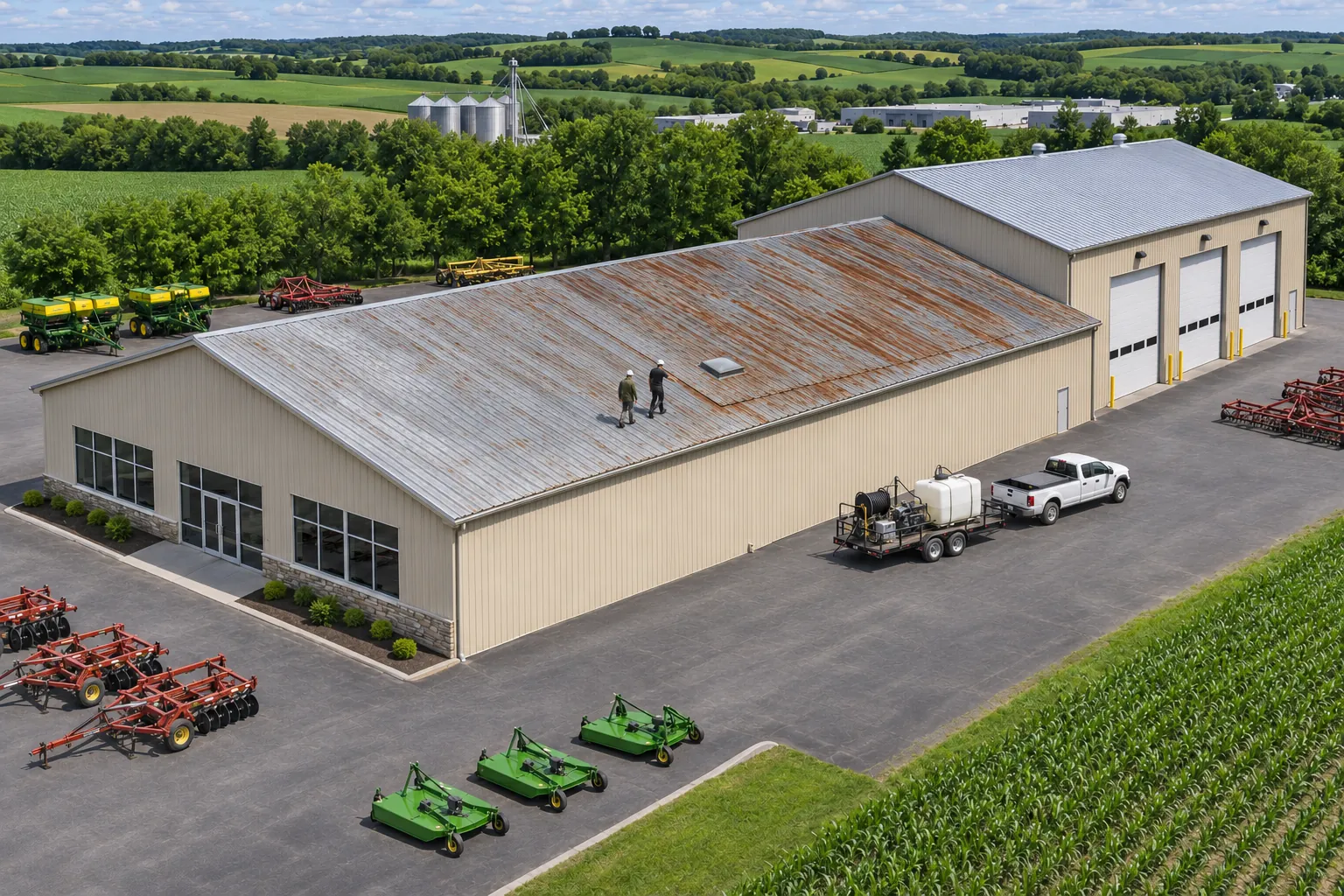
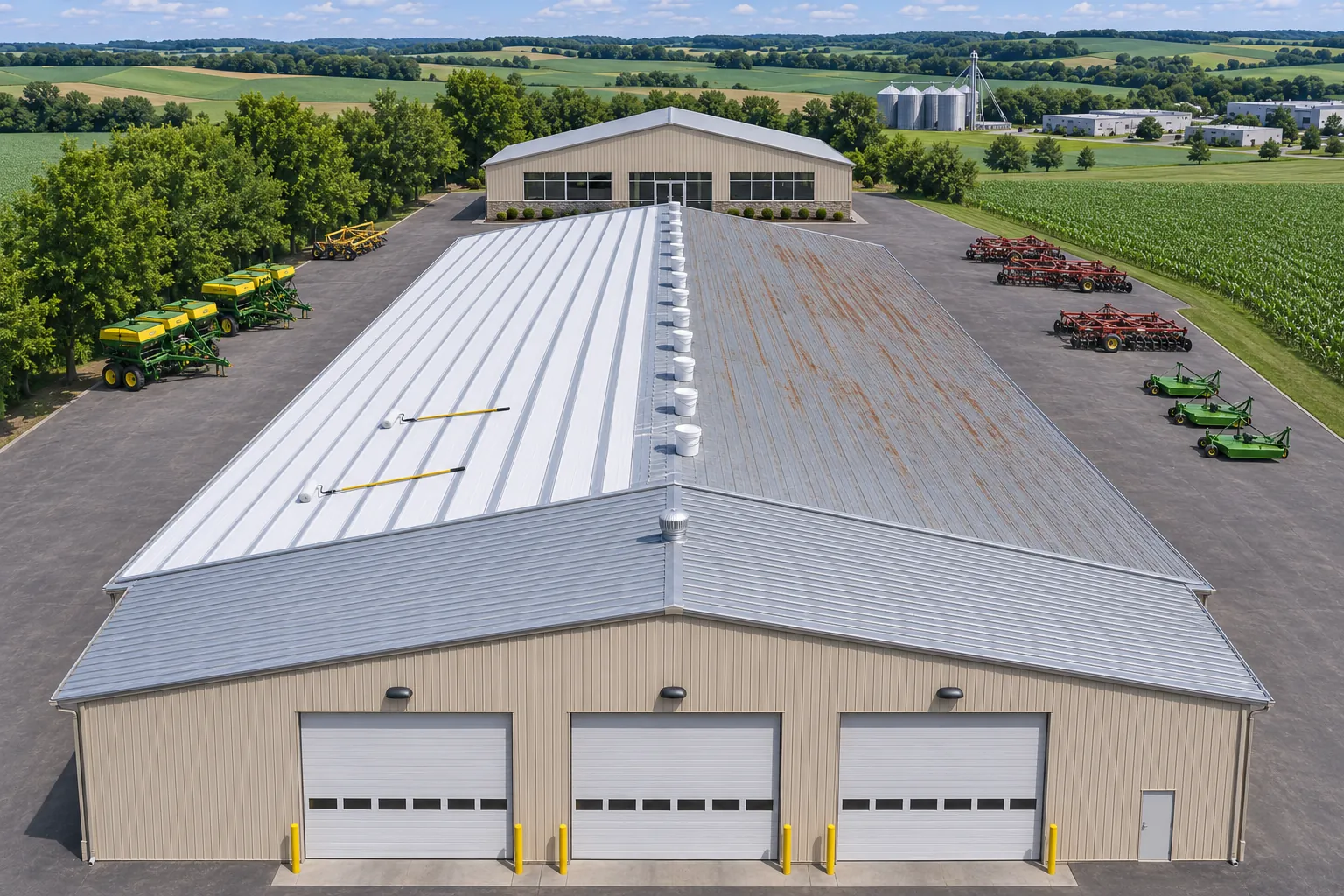
As a Lancaster commercial metal roof coating contractor, we treat rust, repair fasteners and laps, and coat metal roofs on plants, shops, and warehouses.
Lancaster commercial metal roof coating fits some roofs now and others after repairs. This table shows where yours likely lands.
| What We Check | Coat Now | Repair, Then Coat | Replace Instead |
|---|---|---|---|
| Panel steel | Surface rust, steel still firm | Scattered rust holes we can patch | Holes or thin steel across many panels |
| Fasteners | Tight, with washers that seal | Stripped or loose screws to upsize | Purlins too weak to grip new screws |
| Laps and seams | Closed and dry | Open laps to seal and reinforce | Laps sliding apart from frame movement |
| Insulation | Dry when checked | Small wet areas to cut out | Wet across large sections |
| Existing finish | Firm after washing | Peeling areas to scrape and prime | Several failing layers stacked up |
Metal roofs in Lancaster show where they are failing. Here is what each sign usually means and what we do about it.
Orange streaks run down the slope from overlapping panel edges.
Water sits in the lap and rusts both panels from inside the joint.
We open what we can reach, remove loose rust, treat it, and seal the lap before coating.
Ceiling marks follow straight lines across the building.
Washers have cracked and holes have worn oval as panels move.
Screws are swapped for larger ones with new washers, then primed and coated.
A wet line runs under the peak after wind-driven rain.
Ridge cap closures have shrunk or cracked.
Closures are replaced, caps refastened, and joints sealed before coating.
Brick walls stay dark under a roof-to-wall joint.
Flashing at the wall has pulled loose or rusted through.
We rebuild the flashing into the wall and reinforce the joint with fabric and coating.
Water shows near fans and vent stacks on a production roof.
Heat and vibration have cracked the sealant where the curb meets the panels.
Curbs are cleaned, reflashed, and wrapped with fabric before the field is coated.
Four coating systems cover most metal roofs in Lancaster. The roof's slope, drainage, and existing finish decide which one we apply.
Fast-draining metal roofs on shops and barns take water-based acrylic over primed rust and reinforced laps.
Low-slope metal that holds water near gutters takes silicone, which tolerates standing water once cured.
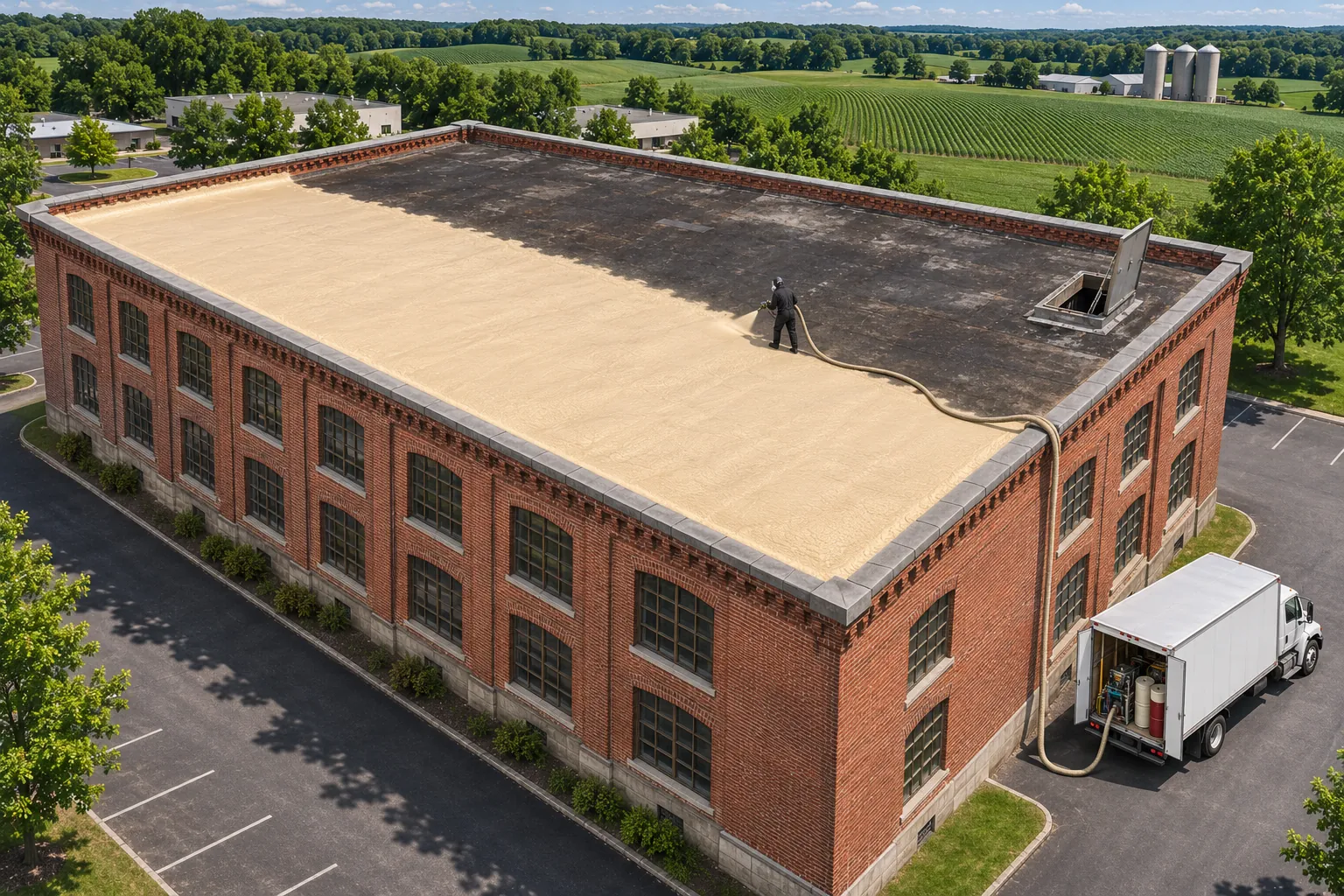
Spray foam fills the ribs and adds insulation, then gets a protective topcoat against sun and traffic.
Each system starts with a rust-inhibiting primer chosen to match the topcoat that follows.
Coating a repaired metal roof gives Lancaster building owners these working gains.

Coating spans every side and end lap so water has no open joint.
Fastener heads sit under primer and coating, ending washer leaks.
Treated surface rust stays dry and quits eating into the steel.
White coatings reflect summer sun and keep the panels cooler.
Crews work from the roof while production and storage carry on.
A washed roof takes a fresh topcoat when the film wears down.
Roof-to-wall flashing is rebuilt and coated with the field.
You keep a written list of every repair made before coating.
Lap rust spreads from inside the joint. Call us and we will check how deep it goes before the next freeze-thaw season.
Five steps, in this order, on every metal roof we coat.
We walk every panel, test screws by hand, open suspect laps, and check insulation from inside where we can reach it.
Loose screws are upsized, rust holes patched, ridge closures replaced, and open laps sealed with fabric.
A pressure wash removes chalk, dirt, and oil so the primer and coating grip the panels.
Scale and flaking rust come off down to firm steel, and a rust-inhibiting primer goes on every bare or rusted spot.
Coating goes on at the specified thickness, with extra build at laps, screws, and penetrations.
Some roofs need a different system or a mix. These are the other services we offer.
Low-slope and flat sections where water sits after rain.

Sloped metal that drains fast, coated in warm, dry weather.

Roofs that need added insulation and one continuous surface.

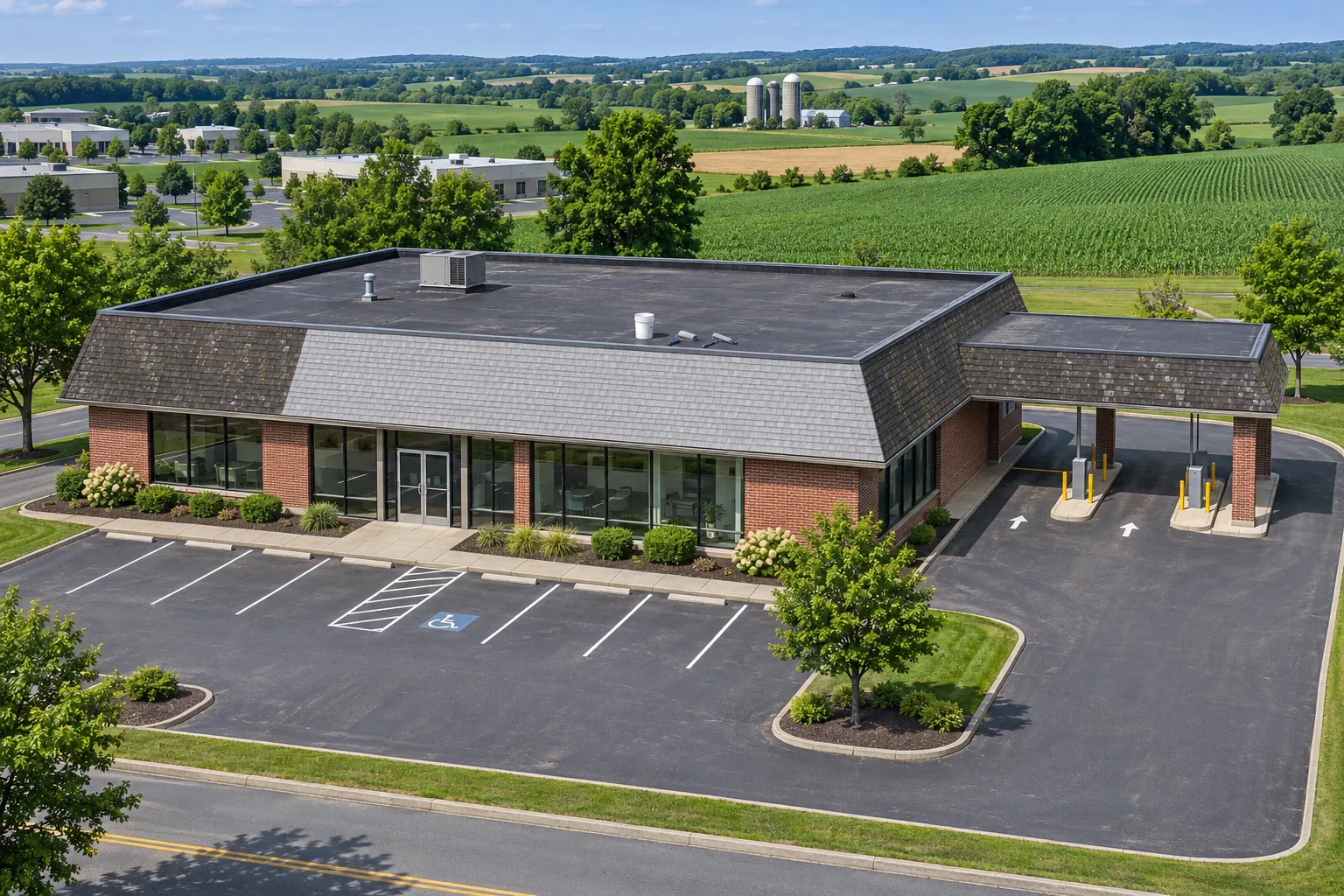
Commercial shingle roofs that still lie flat and keep their granules.
Rust treatment means removing scale and flaking rust down to firm steel, then priming. We use wire brushes or grinders on heavy spots and a rust-inhibiting primer on everything bare. Rust left loose under coating keeps growing and lifts the film.
Restoration makes sense when the panels and frame are firm and the problems sit at laps, screws, and the finish. If rust holes spread across many panels or the purlins no longer hold screws, new metal is the better spend.
The best fit comes from slope, drainage, and the finish already there. Acrylic suits fast-draining slopes, silicone handles low spots that hold water, and foam adds insulation. We choose after the inspection, with a primer matched to the topcoat.
We open the lap edge where we can reach, scrape and brush out loose rust, and treat what remains. Laps with heavy metal loss get a cover strip or a new panel section before any sealing.
Coating only the visible edge leaves rust working inside the joint.
No single chemistry wins on every roof. Silicone, acrylic, and other systems each last longest on the conditions they match. Thickness, primer, seam repairs, and upkeep matter as much as the product name, so we pick the system after seeing the roof.
Longest-lasting comes down to a coating matched to the roof and applied at full thickness. Silicone tends to hold up where water sits, acrylic on fast-draining slopes, and foam with a kept-up topcoat.
Skipped repairs shorten any of them, so the prep list matters as much as the product.
Tell us about the rust, the leaks, and the building. We inspect, repair, and coat it.