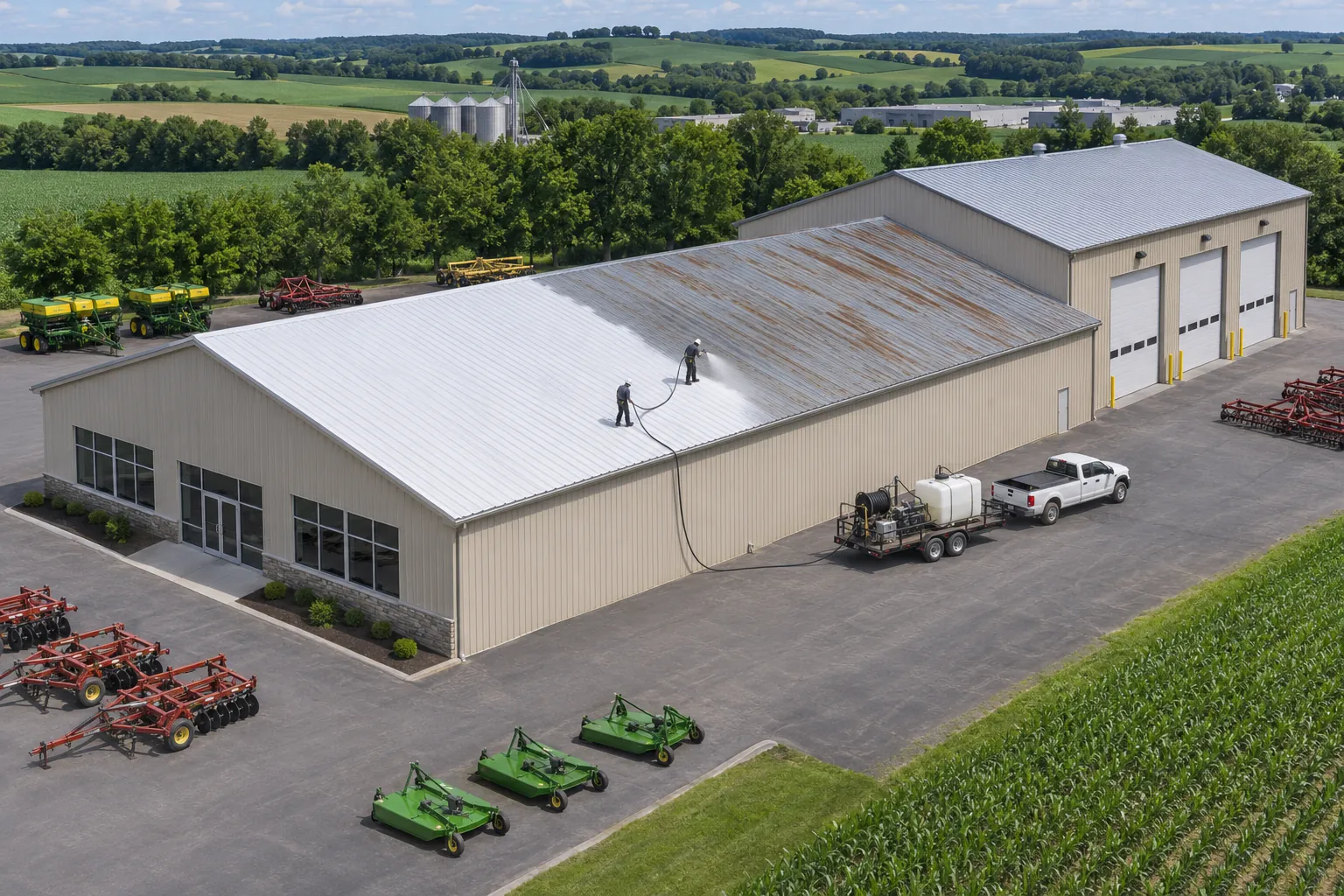
Drone view of a metal equipment building beside farm fields with half the roof coated white and two roofers spraying the rest

Lititz Metal Roof Coating Contractor

Extending Metal Roof Life With Coatings Timed to the Weather

As a Lititz metal roof coating contractor, we repair and coat metal roofs on shops and plants, timing each coat to dry, mild weather.

Lititz Metal Roof Coating Planned Around the Weather

Lititz metal roof coating work depends on the forecast as much as on the roof. Water-based acrylic needs dry hours above freezing to cure, and dew on cool fall mornings shortens the working day. We pick the system and the schedule together.

Slow-draining areas get silicone, and coating days land in stretches of steady, mild weather.

  • Forecast checked before each coating day
  • Dew and surface temperature measured each morning
  • Low spots and outlets checked before choosing a system
  • Spring and fall jobs split into shorter coating runs
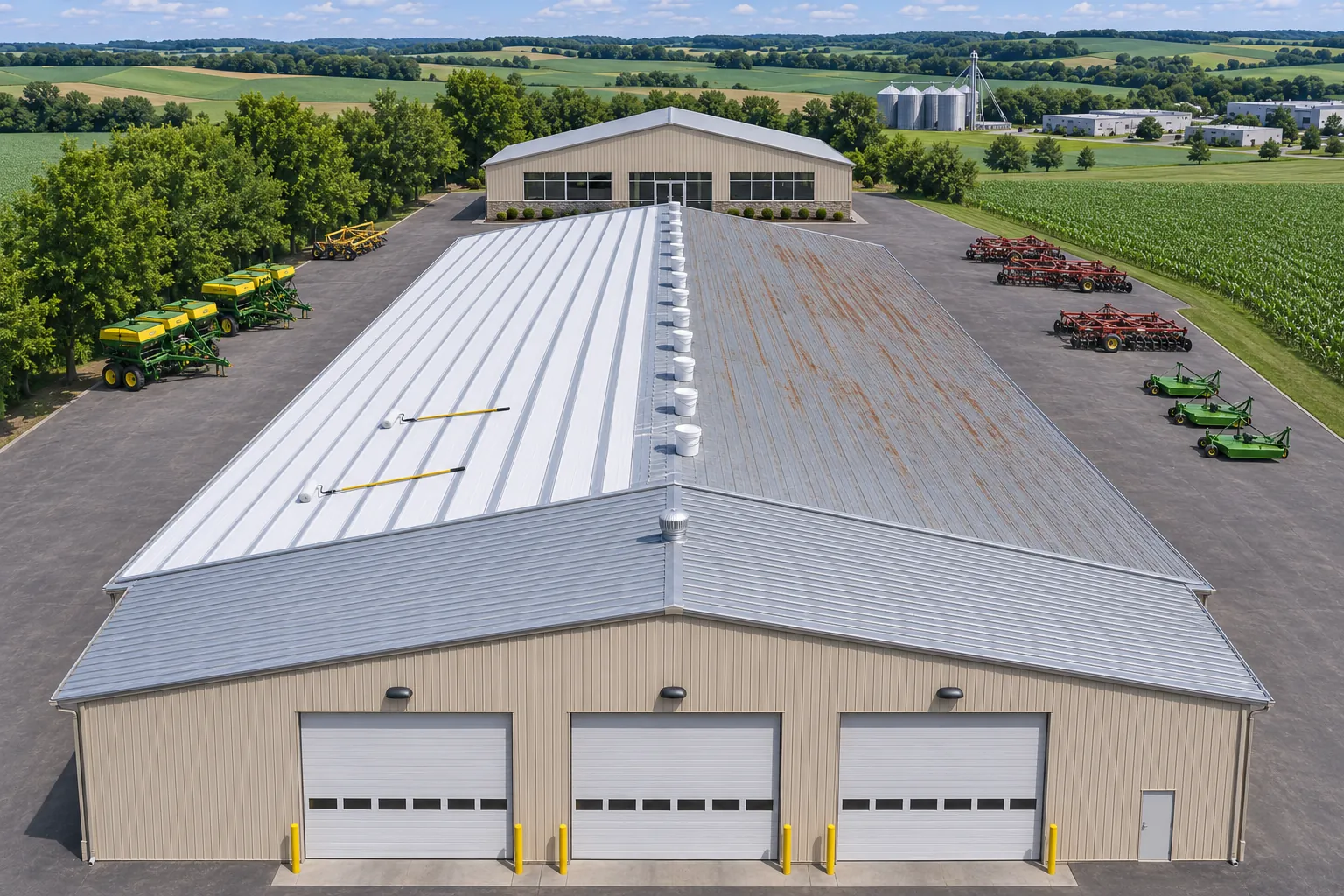
White acrylic coating rolled in lanes along the ribs of a long metal equipment building roof

Metal Roof Coating Problems on Lititz Shops and Plants

These signs show up inside Lititz buildings first. Each one points to a roof detail we fix before coating.

Drip After Every Storm

Water lands in the same spot each time a heavy rain passes.

Likely Cause

A low spot or blocked outlet holds water against a lap until it finds a way in.

What We Do

We clear the outlet, correct the low area where we can, and pick a coating that tolerates standing water.

Peeling After A Cold Snap

Fresh paint or coating flakes off after a cool, damp week.

Likely Cause

It went on in weather too cold or wet for it to cure.

What We Do

Failed film is removed, the surface is primed, and coating waits for a dry, mild window.

Stains Along Screw Lines

Brown marks follow neat rows across the ceiling.

Likely Cause

Cracked washers let water in at each screw as the panels expand and shrink.

What We Do

Screws are tightened or upsized with new washers, then primed and covered by the coating.

Leak Beside A Rooftop Fan

Damp ceiling tiles surround an exhaust fan or vent after rain.

Likely Cause

Sealant at the curb has dried out and pulled away from the metal.

What We Do

Old sealant is cut out, the curb is reflashed, and the detail is reinforced before coating.

Benefits of Coating Your Roof

On Lititz shops and plants, a coating applied in the right weather over a repaired roof brings these gains.

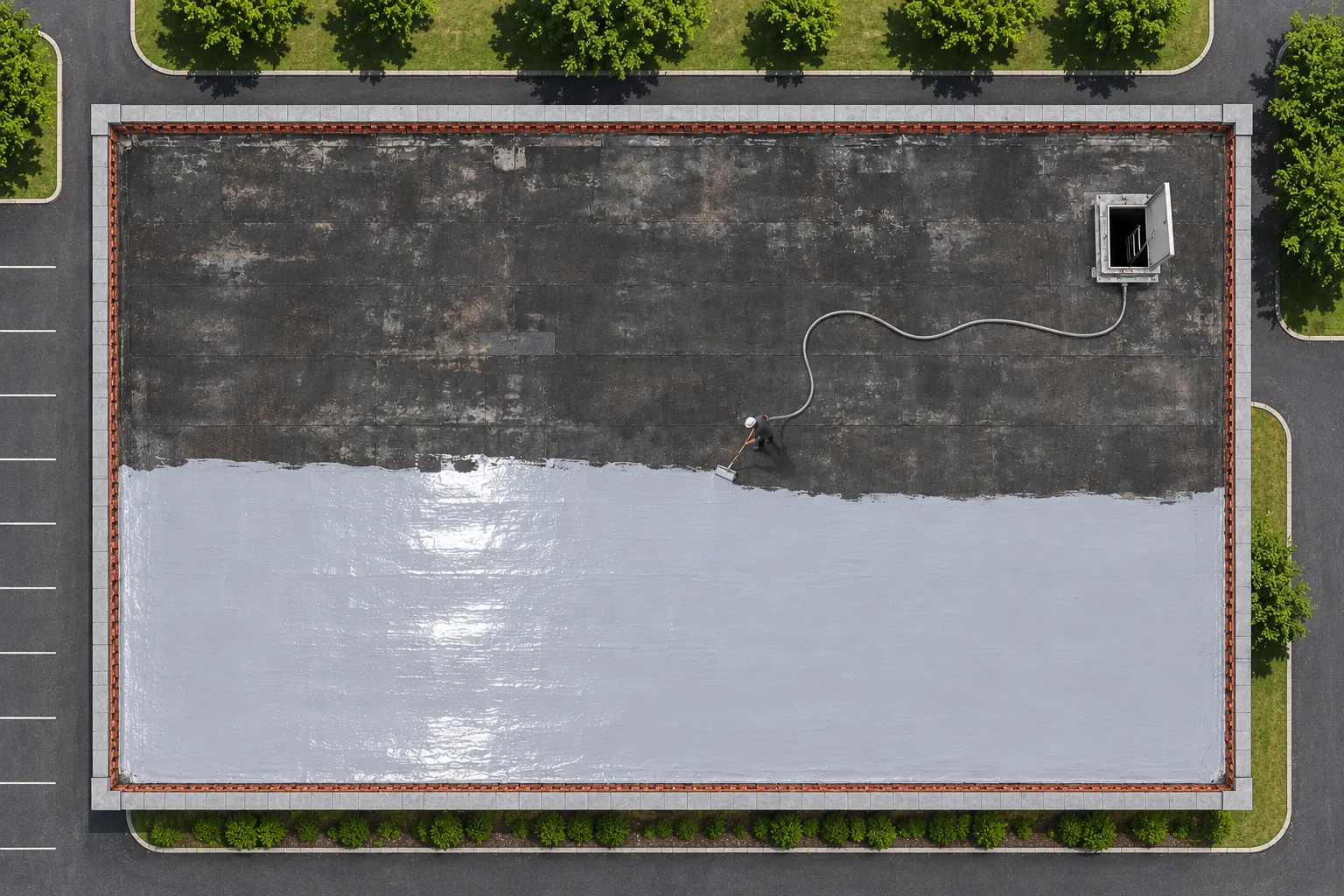
Top-down view of gray silicone coating going down across a dark flat commercial roof
  • Proper Cure

    Coating applied in dry, mild weather sets fully and grips the primed steel.

  • Water Moves Off

    Cleared outlets and corrected low spots let the coated roof shed rain.

  • Laps Under Film

    Side and end laps are bridged by the coating so water finds no open seam.

  • Cooler Plant Floors

    A reflective topcoat keeps summer sun off the steel above production areas.

  • Lines Keep Running

    Work happens on the roof in planned sections while shops and plants operate below.

  • Rust Held Back

    Primed rust spots stay dry under the coating instead of spreading.

  • Recoat Path

    Washing and a fresh topcoat renew the roof later without tearing off panels.

  • Weather Log Kept

    Each coating day gets a note of temperature, dew point, and film thickness.

Commercial Roof Coating Options for Lititz

Weather and drainage narrow the choice on Lititz roofs. These four systems cover what we see most.

Acrylic

Acrylic In Warm Months

Steep, fast-draining metal roofs take acrylic during warm, dry stretches when it can cure overnight.

Silicone

Silicone Where Water Sits

Flat or low-slope sections with slow drains get silicone, which handles standing water once cured.

Spray Foam

Foam For Added Insulation

Heated shops with bare steel roofs can take spray foam, sprayed on dry days and topcoated soon after.

Shingle

Shingle Coating For Front Offices

Office wings with flat, intact shingles can take an approved shingle coating; worn shingles get replaced.

Coating Peeling After Last Fall's Cold Snap?

Film that went on in poor weather has to come off before anything else goes on. Call us and we will check how much has let go.

How Lititz Shops Get a Metal Roof Coating

Five steps, with weather checks built into the last two so each coat cures as it should.

  1. Step 1

    Inspect Your Roof

    We walk the roof after rain where we can, mark low spots and blocked outlets, test screws, and check existing coating for grip.

  2. Step 2

    Fix Drainage And Details

    Outlets are cleared, curbs and vents reflashed, and open laps sealed so water leaves the roof before coating starts.

  3. Step 3

    Wash And Prime

    The roof is washed and dried, rust is brushed down, and primer covers bare steel and chalky paint.

  4. Step 4

    Check The Weather Window

    Each morning we read surface temperature, dew point, and the forecast before any coating is opened.

  5. Step 5

    Apply The Coating

    Base and top coats go on at the specified thickness during dry hours, with extra build at laps and screws.

Nearby Towns We Cover From Lititz

Not sure your building falls in our area? Call us or send us a message. We coat commercial metal roofs in the towns below.

Farm And Equipment Buildings

Older Brick Warehouses And Storefronts

Shops, Schools, And Churches

Lititz Owners Ask About Metal Roof Coating

  1. Is There Lititz Metal Roof Coating Near Me for Spring Work?

    Yes, we schedule Lititz roofs in spring once nights stay above freezing and the roof dries by mid-morning. Early-season jobs use shorter coating runs, and acrylic waits for the warmer end of the forecast.

  2. How Do I Find a Metal Roof Coating Contractor Near Lititz?

    Look for one who inspects before quoting and explains how weather affects the schedule. Ask what system goes on the low spots, how thick each coat will be, and what happens if rain arrives mid-job.

  3. What Is the Lititz Metal Roof Coating Cost for a Shop Roof?

    Planning figures are about $2.50 to $4.00 per square foot of roof for coating and about $5 to $8 for replacement. Drainage fixes, curb and vent flashing, rust prep, coating thickness, and the number of coats move a shop roof within that range.

  4. What should a Lititz commercial roof's drainage tell us about coating?

    Drainage tells us which system can work and what has to be fixed first. We look for low spots that hold water a day after rain and outlets clogged with debris.

    Silicone handles slow-draining areas better than acrylic, but water trapped by the roof's shape still needs correcting.

  5. Can Coating Work Continue in Late Fall?

    Some of it can. Repairs, washing, and priming carry on in cooler weather, and silicone tolerates lower temperatures than acrylic. Once nights freeze regularly, acrylic coating stops until spring and the prepared roof is protected in the meantime.

  6. Why Does Dew Matter on Coating Days?

    Dew leaves a film of water on the panels that keeps coating from gripping and can wash out fresh acrylic. On cool mornings we wait until the roof is dry to the touch and the surface sits above the dew point before starting.

Hire a Lititz Metal Roof Coating Contractor

Tell us about the roof, the drainage, and when the building is busiest. We inspect, repair, and coat in the right weather.

Call Us(223) 677-3304