
Granules In The Gutters
Gutters fill with dark grit after storms.
Likely Cause
The shingle surface is wearing and losing its protective granules.
What We Do
We check how much remains and whether an approved coating can protect what is left.
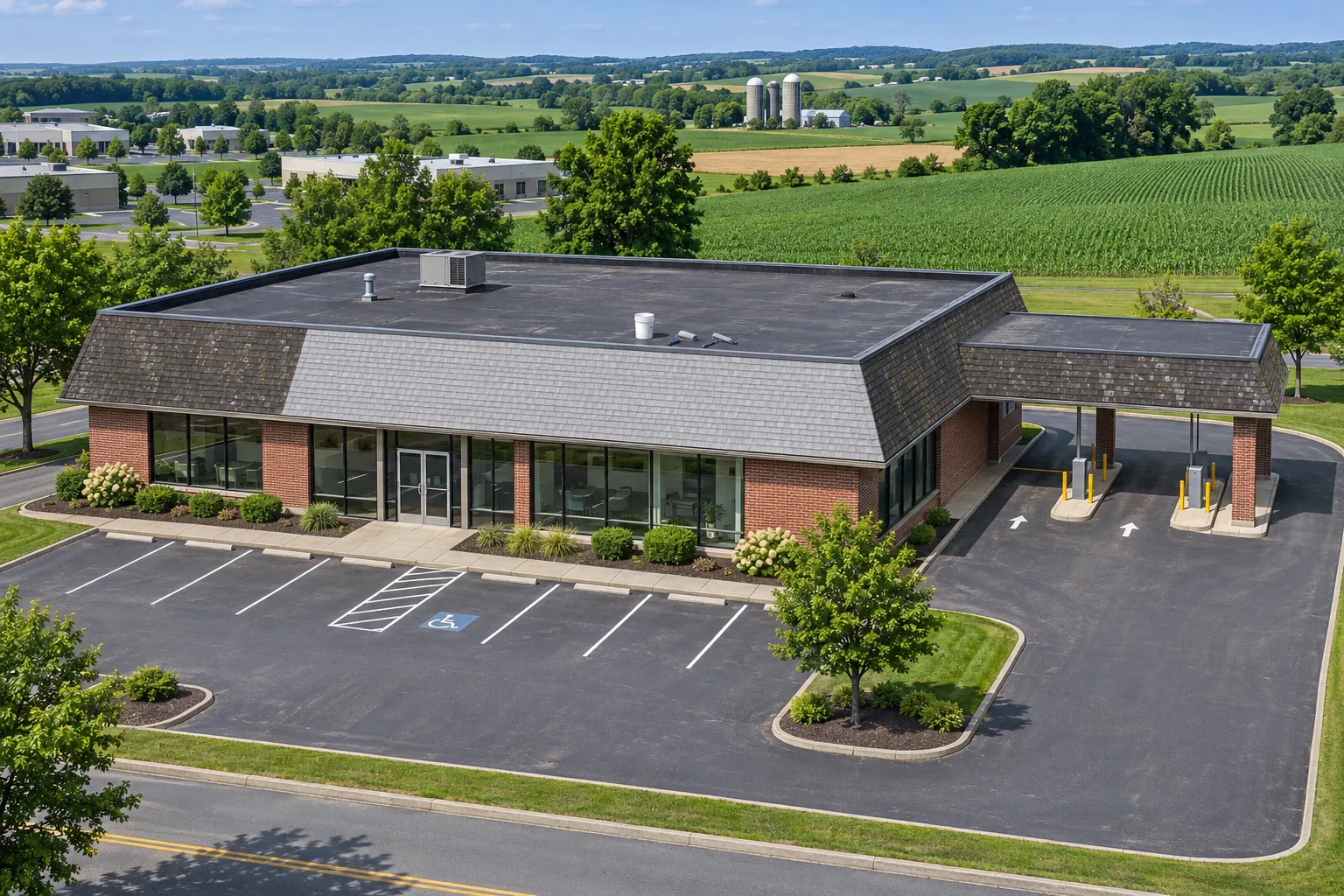
As a Lancaster shingle roof coating contractor, we coat commercial shingle roofs that still lie flat, and tell owners plainly when new shingles make more sense.
Lancaster shingle roof coating fits a narrow set of roofs. This table shows the line between coating and new shingles.
| What We Check | Coating Fits | Fix First | Replace Shingles |
|---|---|---|---|
| Shingle shape | Flat and flexible | A few lifted tabs to reseal | Curled, cupped, or brittle |
| Granules | Most still in place | Bare patches to spot-repair | Bare across large areas |
| Product approval | Coating approved for shingles | Approval to confirm in writing | No approved product exists |
| Flashing | Firm at walls and vents | Loose pieces to reset | Rusted or missing throughout |
| Attic and deck | Dry and ventilated | Small wet areas to fix | Soft or rotted decking |
Commercial shingle roofs show these signs before an owner calls. Each one decides between coating and new shingles. Most begin in the gutters.
Gutters fill with dark grit after storms.
The shingle surface is wearing and losing its protective granules.
We check how much remains and whether an approved coating can protect what is left.
A few shingles flap or stick up after a storm.
The seal strips have let go on those tabs.
Tabs are resealed or replaced before any coating is considered.
A ceiling stain sits under a roof-to-wall joint.
Step or counter-flashing has loosened.
Flashing is reset and sealed, since coating the field leaves that joint open.
Shingle edges cup or curl over large areas.
Age and heat have dried the shingles out.
We recommend new shingles, because a coating over curled shingles fails quickly.
Drips show under vent pipes after storms.
Rubber boots around the pipes have cracked with age.
Boots are replaced and sealed before the field of the roof is considered for coating.
Shingle coating is one of four systems we work with in Lancaster. Here is where each one fits.
Flat, flexible shingles with good granule cover can take a coating the maker approves for them.
Lifted tabs and loose flashing get fixed first, whether or not a coating follows.
Metal porch roofs or canopies on the same building can take acrylic over primer.
Low-slope areas beside a mansard or shingle face often take silicone.
On the right shingle roof, a coating gives Lancaster owners these gains.
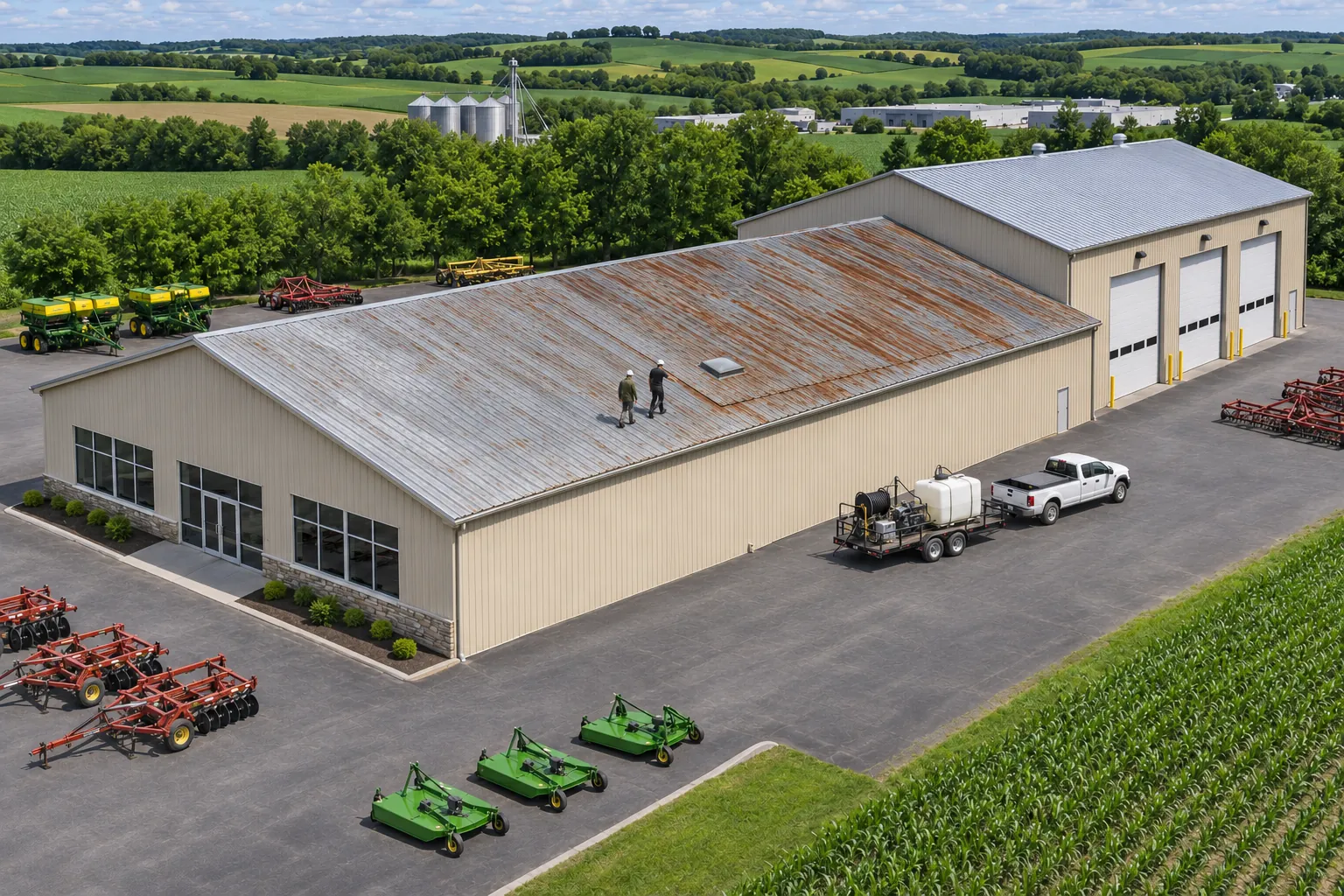
Coating holds remaining granules in place on worn but flat shingles.
Light-colored coatings reflect more sun than dark shingles.
Reroofing can wait while the shingles stay flat and flexible.
Every wall, vent, and edge detail gets fixed along the way.
Commercial shingle roofs on churches and offices are the usual candidates.
You get the product's shingle approval with your estimate.
Resealed tabs and coated edges shed rain cleanly.
Roofs past coating get a replacement recommendation instead.
Granule loss is the first sign a shingle roof is aging. Call us and we will tell you whether coating still fits or new shingles make more sense.
Five steps, with a clear stop point if the shingles are past coating.
We check shingle flex, granule cover, flashing, ventilation, and the deck from the attic where we can reach it.
The coating maker's instructions have to approve it for asphalt shingles on this roof before we go further.
Lifted tabs are resealed, broken ones replaced, and flashing at walls and vents reset.
A low-pressure wash removes dirt and loose granules without stripping the shingles.
The approved coating goes on at its specified thickness, with care at edges and flashing.
Metal and flat sections on the same building take other coatings. These are the other services we offer.
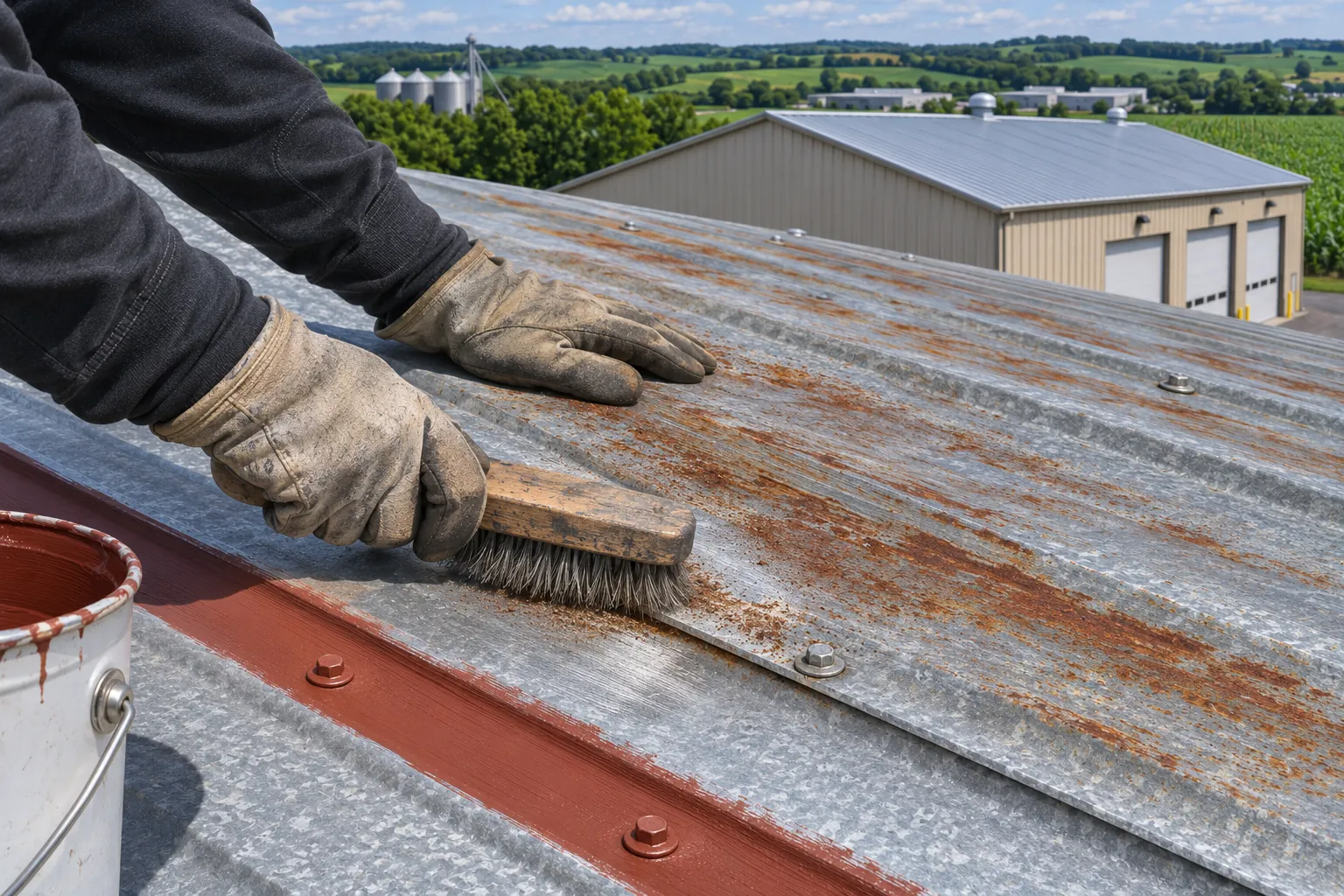
Steel roofs that need fastener, lap, and rust repair first.
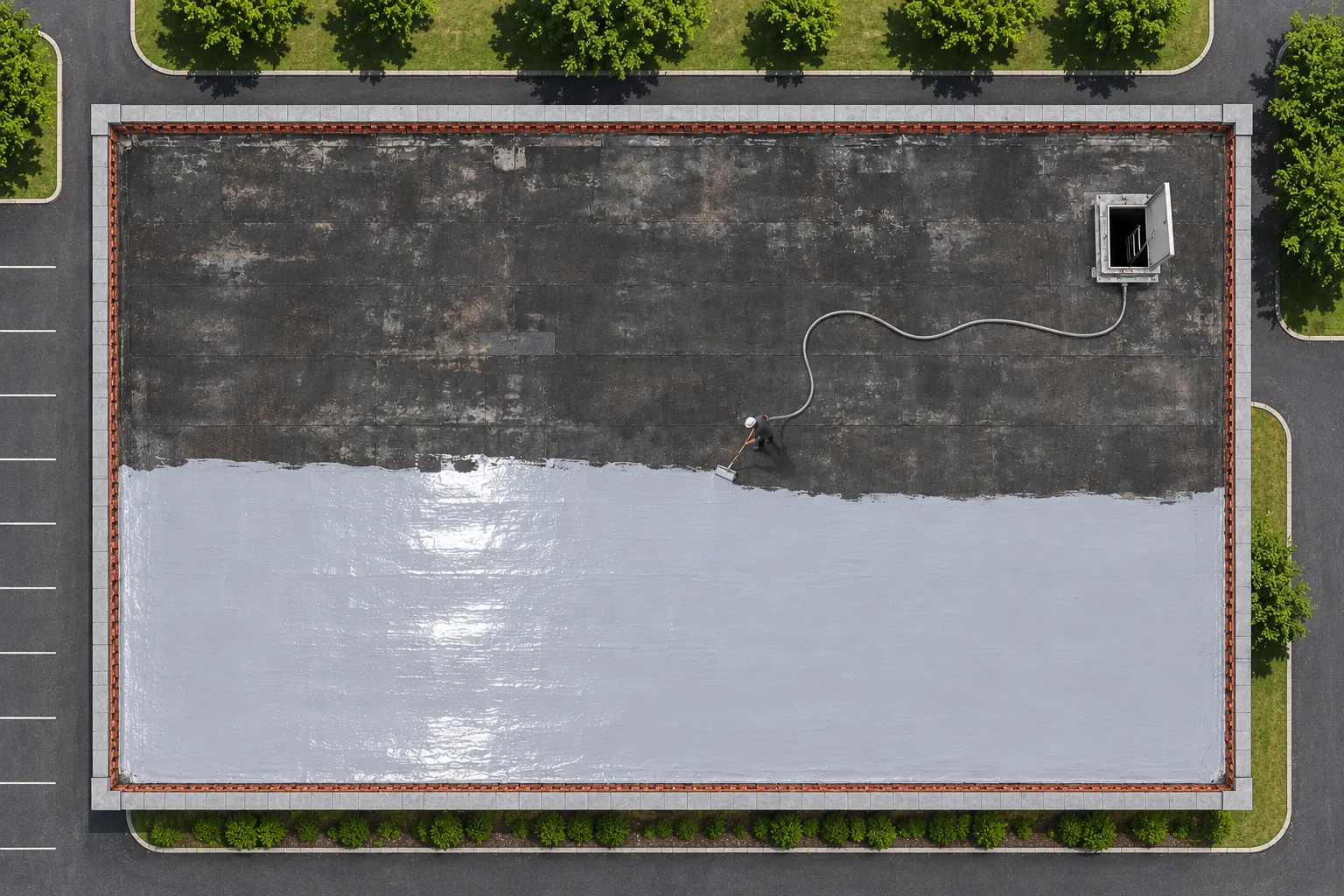
Low-slope and flat sections where water sits after rain.
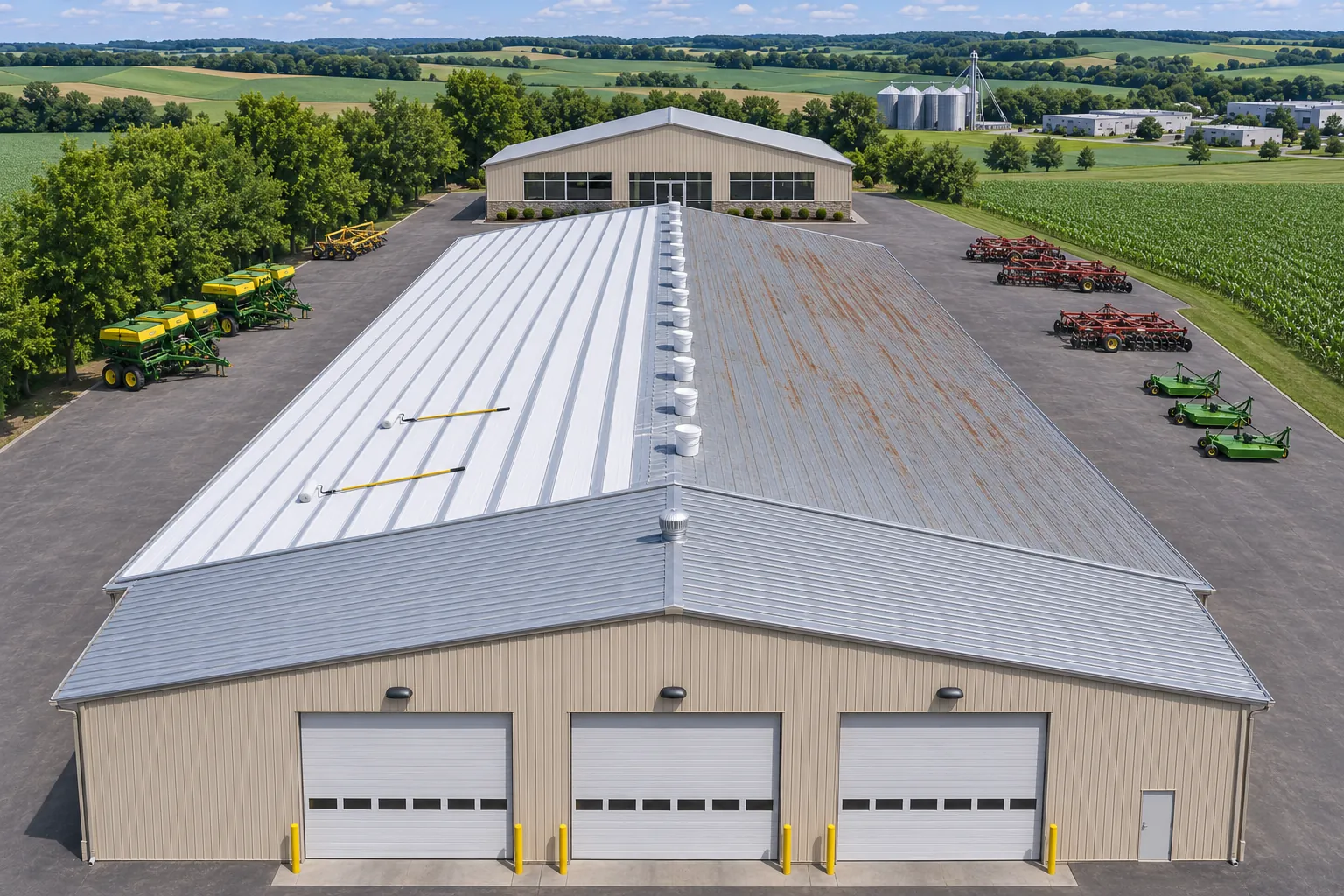
Sloped metal that drains fast, coated in warm, dry weather.
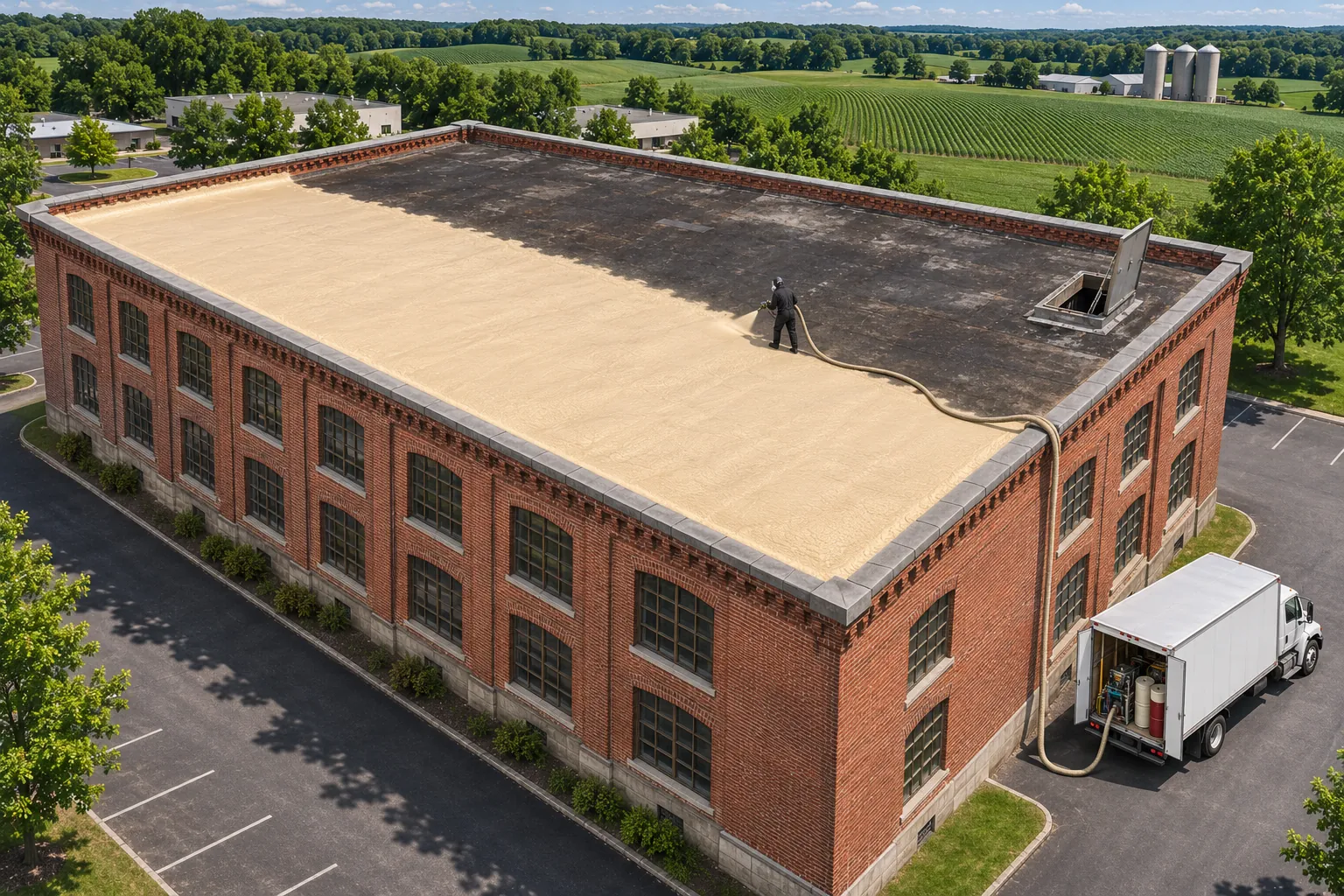
Roofs that need added insulation and one continuous surface.
Coating usually runs about $2.50 to $4.00 per square foot of roof, against about $5 to $8 for replacement. Shingle repairs, flashing work, roof size, access, and the coating type and thickness move the figure. Shingle roofs without an approved product get no coating price.
It is used on a narrow set of commercial roofs, often churches, offices, and mansard faces. The shingles have to be flat and flexible, and the coating has to be approved for them. Strip centers with mansard fronts are another.
Condition decides. Flat, flexible shingles with most of their granules can take an approved coating. Curled, brittle, or bare shingles need reshingling, along with any deck and flashing repairs the tear-off uncovers. We show you the shingles that decided it.
Only a coating whose maker approves it for asphalt shingles, confirmed in writing. We also look at the shingles' condition, attic ventilation, and flashing. A product made for metal or flat roofs is the wrong choice, and worn shingles point toward replacement.
When shingles curl, turn brittle, or lose large areas of granules. We also check the deck and flashing to size the full job. Any moisture or ventilation problem gets fixed as part of the work, whichever way the roof goes.
A tear-off also exposes the deck for checks.
Start with compatibility: no approved product means no coating budget. From there, roof size, access, coating type and thickness, number of coats, penetrations, flashing, and repairs set the figure.
Planning numbers run about $2.50 to $4.00 per square foot for coating and $5 to $8 for replacement.
The best choice is one the coating maker approves for asphalt shingles, applied to shingles that are still flat and flexible. Approval comes first, then the shingle condition and ventilation checks. Products made only for metal or flat roofs are left off shingle roofs.
Send a few details about the shingles and the building. We inspect, confirm the product, and give a straight answer.