
Chalky, Rusted Panels
Paint rubs off on your hand and rust spots dot the slope.
Likely Cause
The factory finish has worn through and the steel is starting to rust.
What We Do
We wash off the chalk, brush down rust, and prime before acrylic.
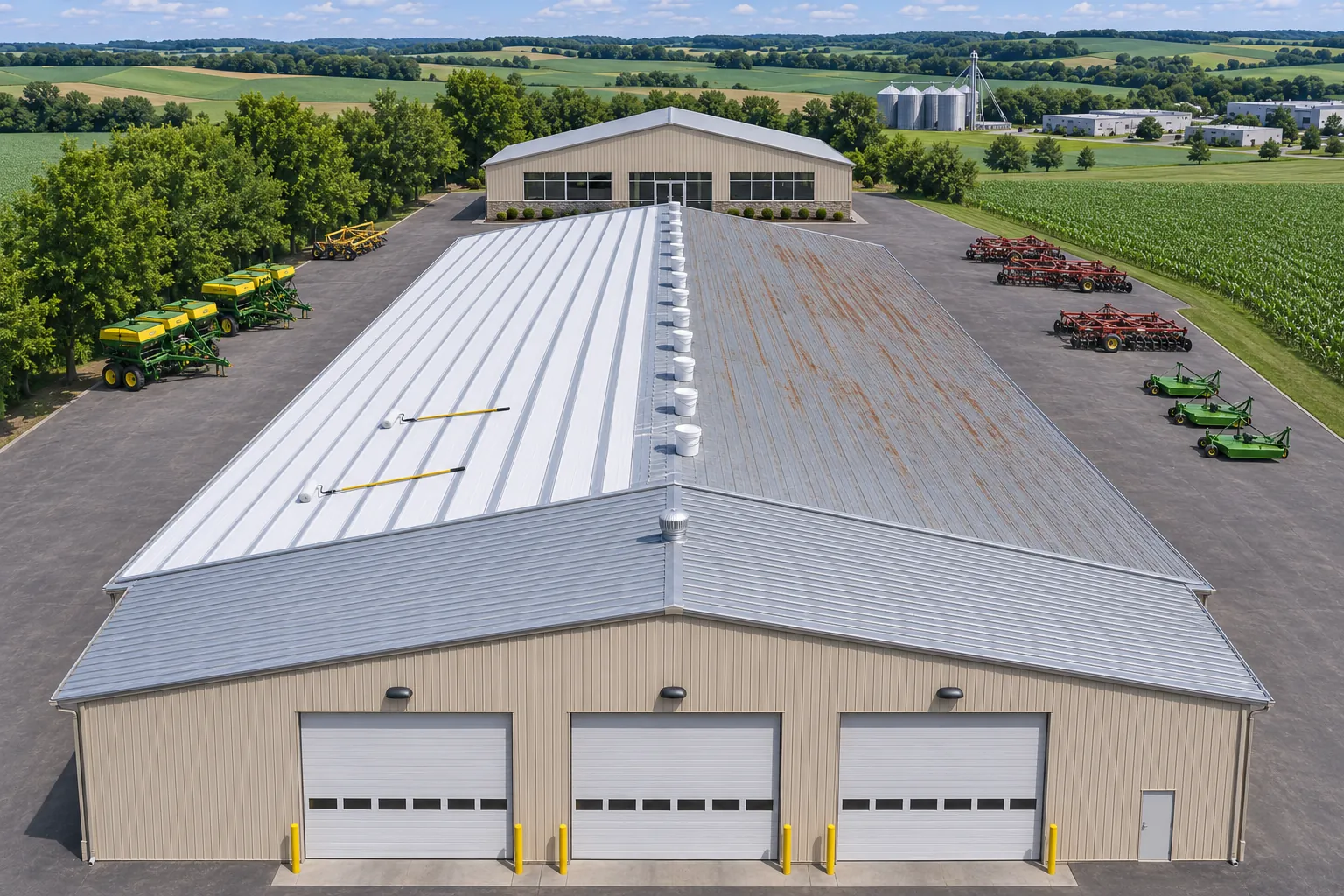
As a Lancaster acrylic roof coating contractor, we prime, reinforce, and coat sloped metal roofs on shops, barns, and plants during dry, mild weather.
Lancaster acrylic roof coating works best on roofs that drain fast. This table shows how we decide.
| What We Check | Acrylic Fits | Fix First | Pick Another System |
|---|---|---|---|
| Slope and drainage | Water runs off within minutes | Clogged gutters or low eaves | Water sits for a day or more |
| Panel steel | Surface rust on firm metal | Scattered holes to patch | Thin or holed steel across the roof |
| Existing finish | Bare metal or firm acrylic | Peeling paint to scrape off | Silicone already on the roof |
| Building below | Ventilated shop or barn | Condensation to address inside | Wet interior with no ventilation plan |
| Season | Warm, dry weeks ahead | Short fall days to split up | Freezing nights in the forecast |
These signs show up before an acrylic job. Each one changes the preparation. Most start with chalk or rust.
Paint rubs off on your hand and rust spots dot the slope.
The factory finish has worn through and the steel is starting to rust.
We wash off the chalk, brush down rust, and prime before acrylic.
Drips show partway down the slope where panels overlap.
End laps have opened as the roof moves with heat and cold.
Laps are sealed and covered with fabric embedded in acrylic.
Water drips inside on cold mornings with no rain.
Warm, moist indoor air is condensing on bare steel.
We flag the ventilation fix inside and coat the outside once leaks are ruled out.
A previous coating peels in patches after cold, wet weeks.
It went on in weather too cool or damp to cure.
Loose film comes off and the new coat waits for a dry, mild stretch.
Rain spills over gutters along the low edge during heavy storms.
Clogged or undersized gutters push water back onto the lower panels.
Gutters are cleared or repaired so acrylic at the eave stays out of standing water.
Acrylic sits beside three other systems we apply in Lancaster. Slope and season decide between them.
Sloped metal roofs get a base and top coat of acrylic over primer and fabric at laps.
Flat sections that hold water get silicone instead, since acrylic softens under standing water.
Insulating spray foam can take acrylic as its protective topcoat on sloped or flat roofs.
A rust-inhibiting primer goes under the acrylic wherever bare or rusted steel shows.
Acrylic over a repaired metal roof gives Lancaster owners these gains.
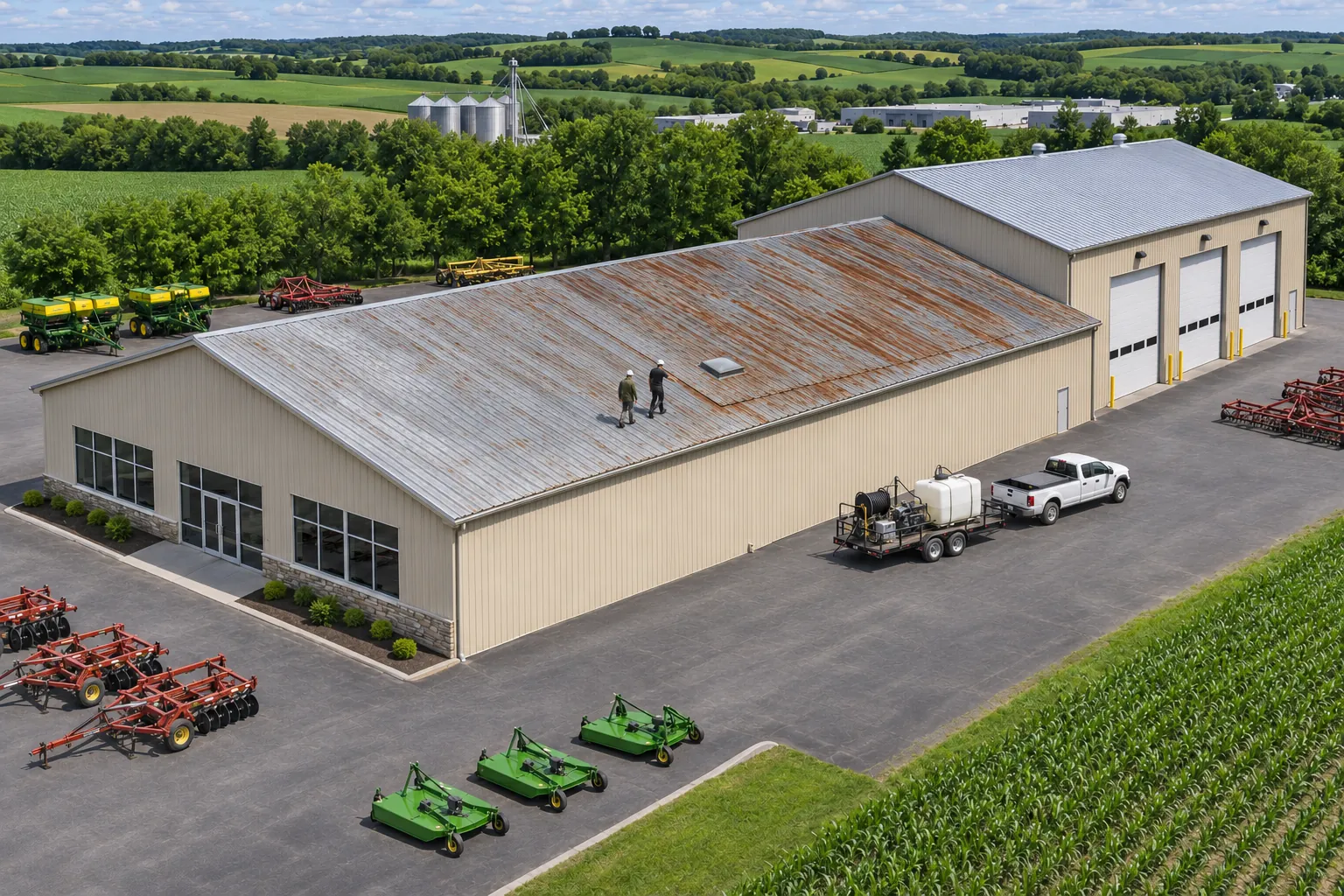
Acrylic reflects summer sun and keeps the steel cooler.
End and side laps are reinforced so movement stays under the film.
Primed rust spots stay dry beneath the coating.
A clean acrylic roof takes another acrylic coat easily.
Low odor makes it easier to coat over occupied space.
Sloped farm and shop roofs are where acrylic works hardest.
Each primed screw head gets extra acrylic over it.
You get notes on weather and thickness for each coating day.
That is the stage where acrylic does the most good. Call us and we will check the steel before rust goes deeper.
Five steps, with the coating days set by the forecast.
We check slope and drainage, test screws, look at laps and rust, and check the underside for condensation.
Screws are upsized, holes patched, and laps sealed with fabric set in acrylic.
Chalk and dirt are washed off, rust brushed down, and primer applied to bare steel.
Coating days need dry hours above freezing so each coat cures before dew or rain.
Two coats go on at the specified thickness, with drying time between them.
Flat sections and insulated roofs call for something else. These are the other services we offer.
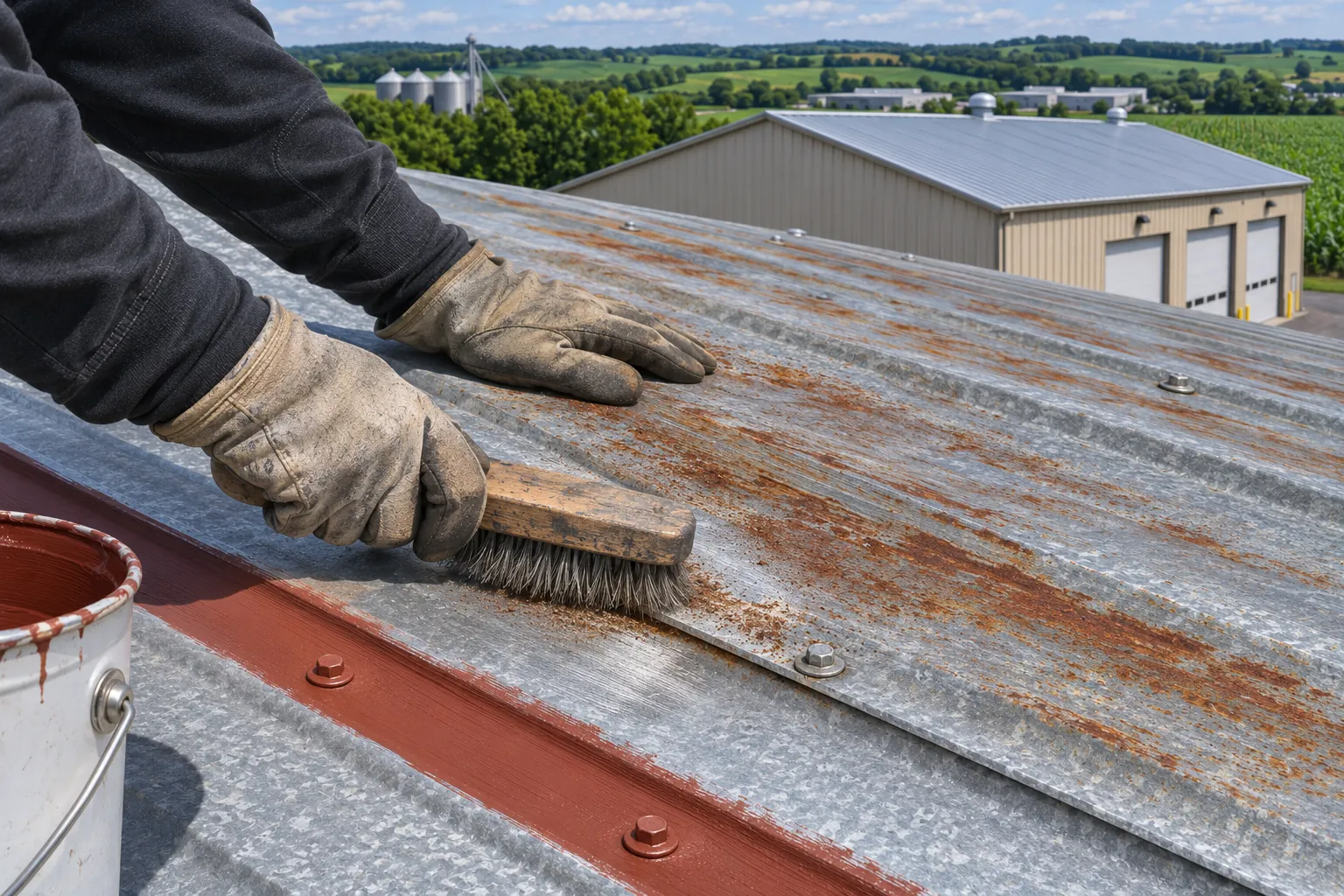
Steel roofs that need fastener, lap, and rust repair first.
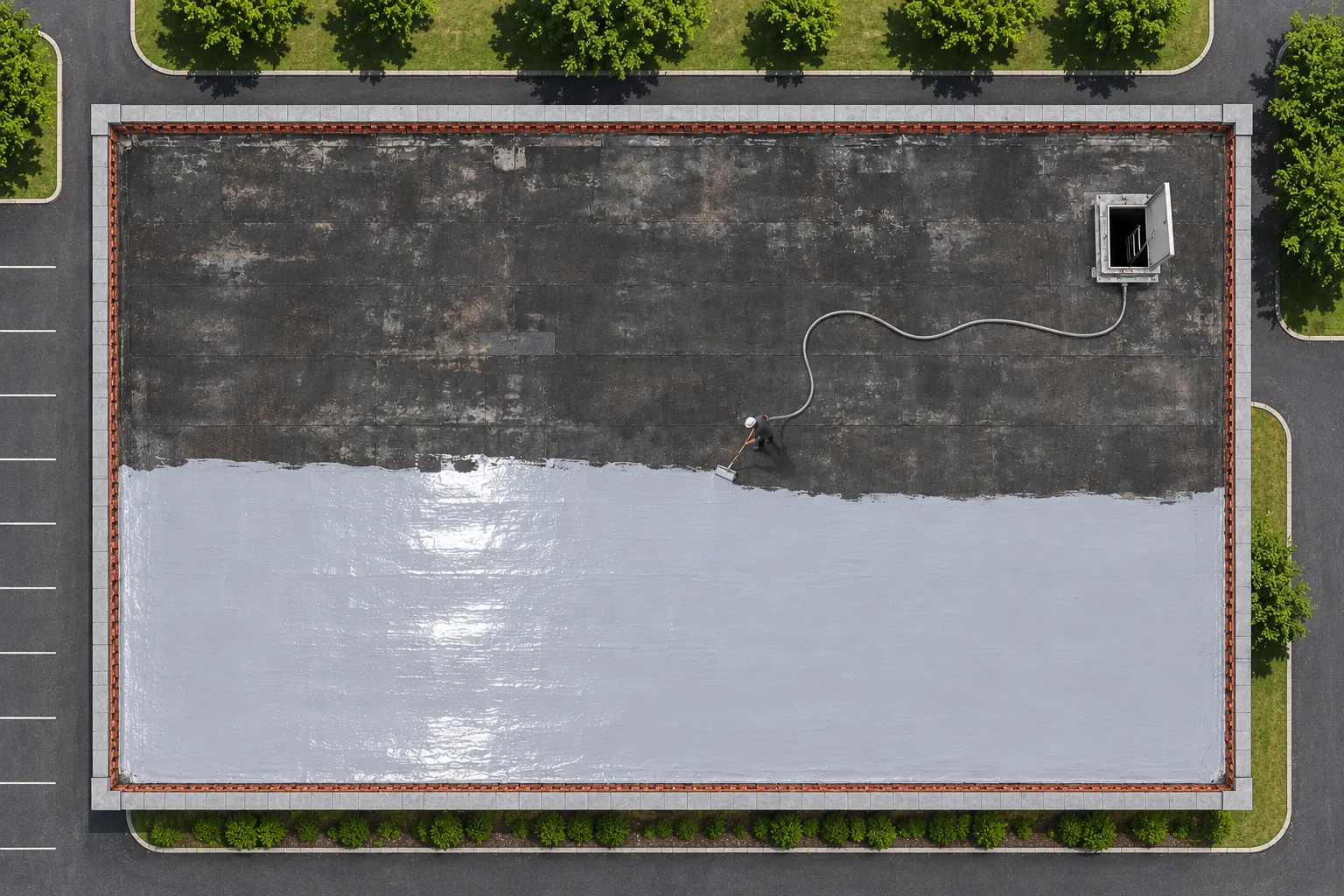
Low-slope and flat sections where water sits after rain.
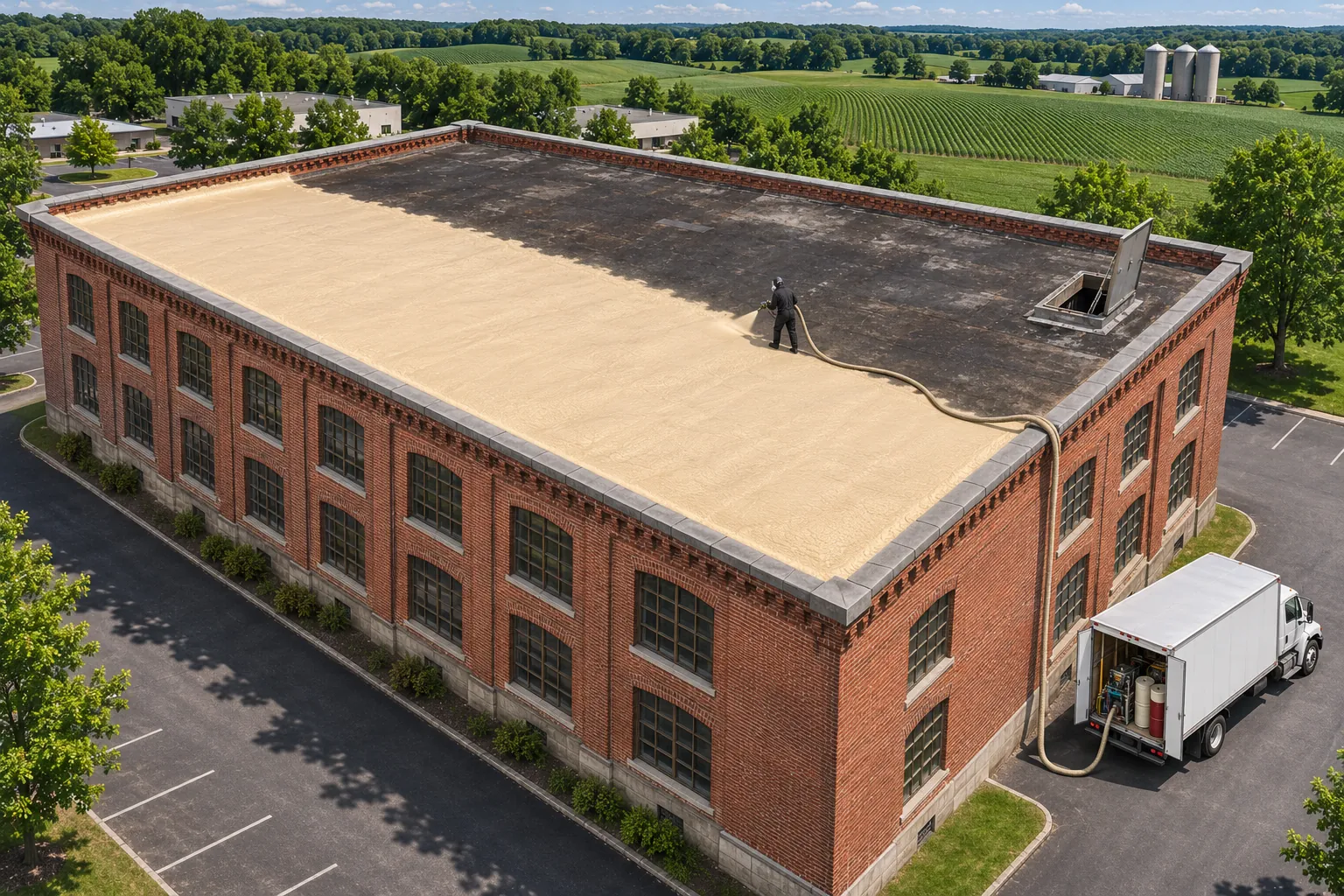
Roofs that need added insulation and one continuous surface.
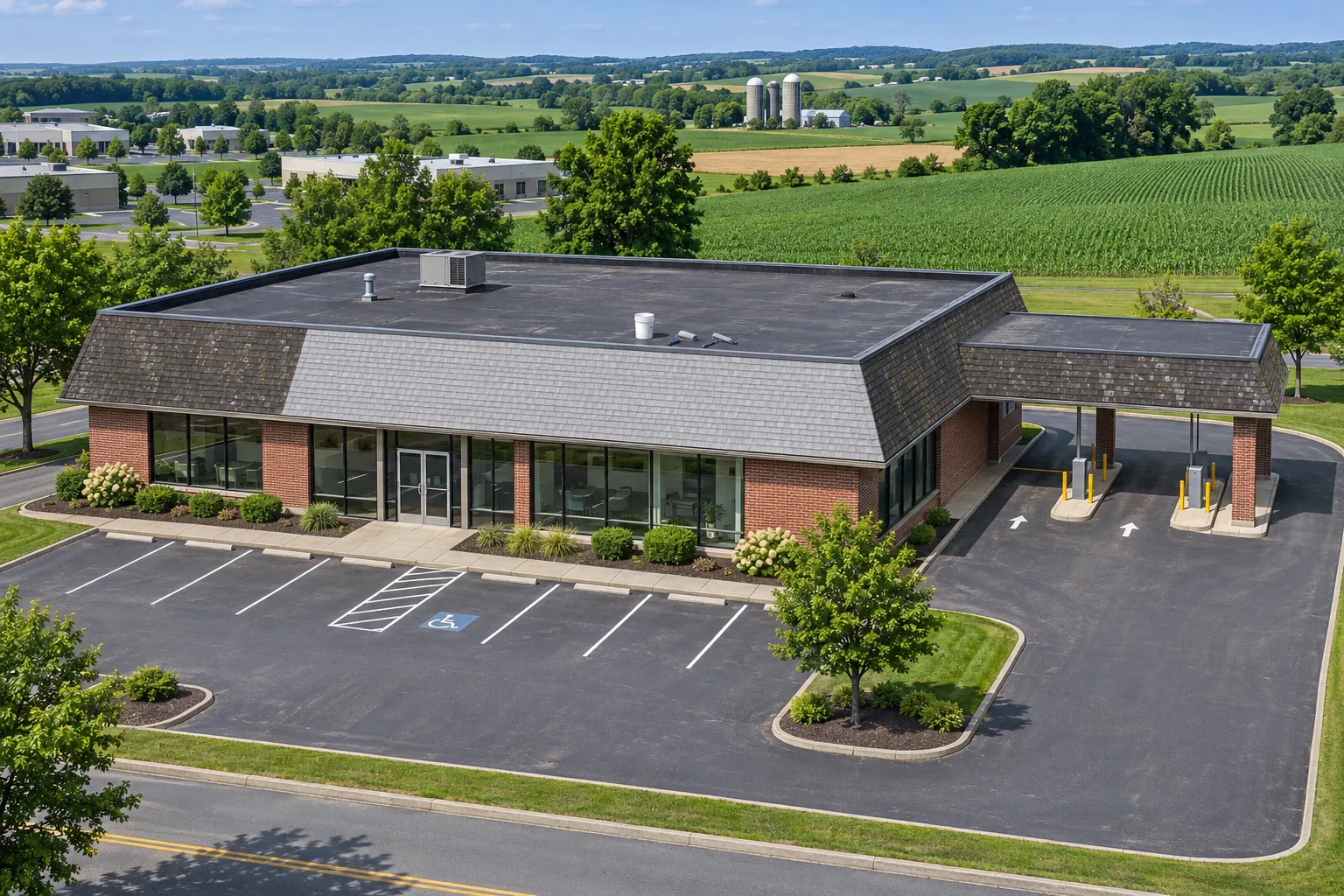
Commercial shingle roofs that still lie flat and keep their granules.
Acrylic life follows thickness, cure weather, drainage, and upkeep. Roofs that shed water fast and get washed and touched up keep acrylic working longest. Areas under standing water or heavy foot traffic wear first. Recoating before the film wears through keeps the steel covered.
Yes, sloped metal is one of acrylic's strongest uses. Rust gets primed, laps reinforced with fabric, and screws sealed before the acrylic goes on in two coats. Steep barn and shop roofs are a common fit.
Most acrylic systems call for a base coat and a topcoat to reach the specified thickness. Some roofs need an extra pass at laps and ribs. We measure film as we go rather than counting coats alone. Rib edges usually get an extra pass.
Thickness, moisture, and foot traffic all vary across a roof. Ribs that got a thin coat, low eaves where water lingers, and paths to rooftop units wear first. We inspect those areas separately to tell normal wear from a defect underneath.
Firm metal, a primed surface, and slopes that drain quickly. We also look at ventilation inside, since barn humidity can condense on the steel. A coating on the outside leaves indoor condensation untouched, so that gets its own fix.
Ribs need the full specified thickness like the rest of the roof, and their edges thin out easily. We often add a pass along the ribs, check drying between coats, and confirm the film formed fully before calling the roof done.
It does when the coating days are chosen well. Acrylic needs dry hours above freezing to cure, so spring and fall jobs get split into shorter runs and summer gives the longest windows. Roofs that hold water get silicone instead.
Tell us the roof's slope, its age, and where the rust shows. We inspect, prime, and coat in the right weather.